Pakol or Karakul: Which Afghan Hat to Wear

Sep 03, 2026
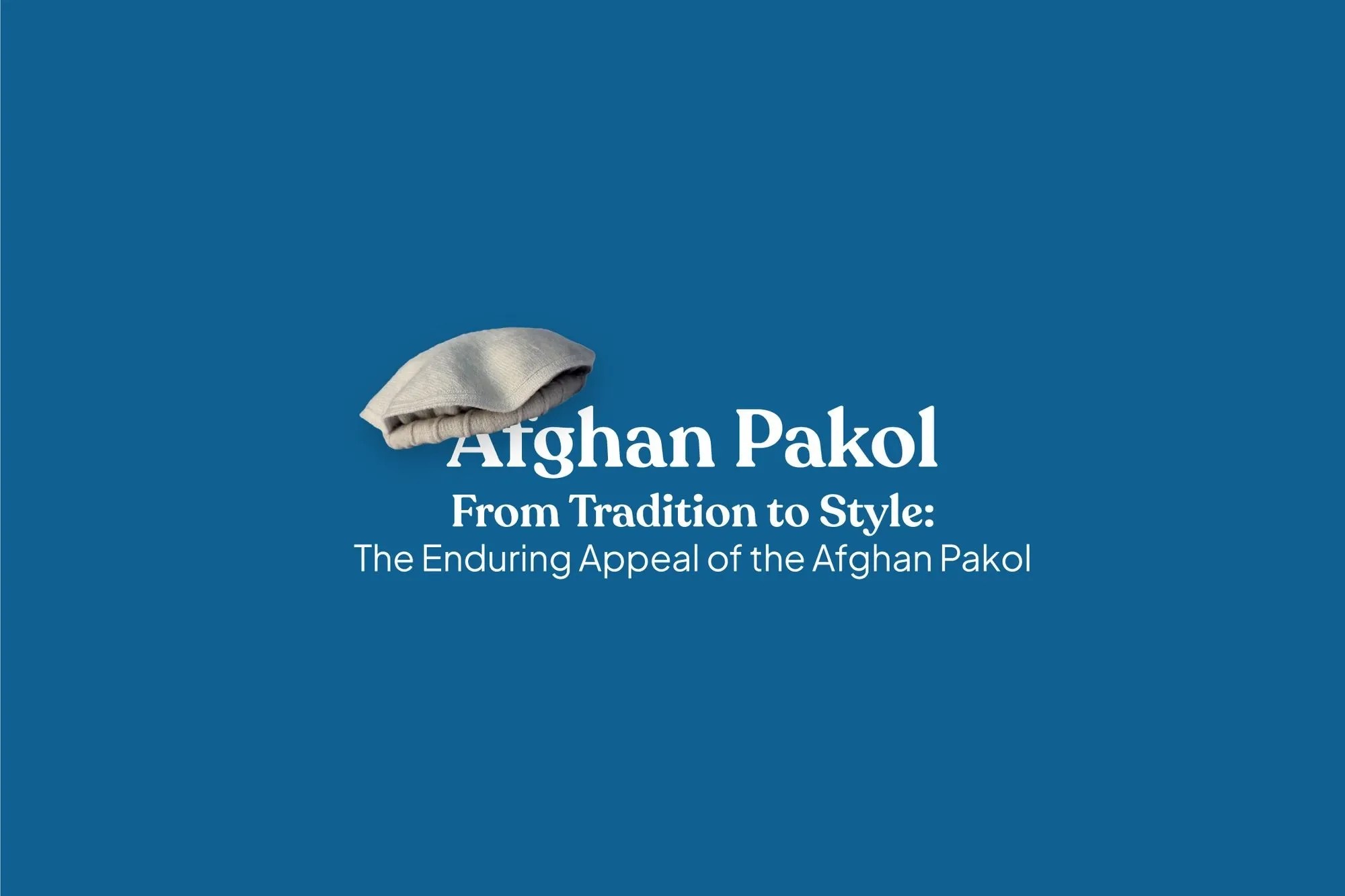
Pakol or Karakul: Which to Wear
The Afghan Pakol is a mesmerizing traditional wearing found in the untamed highlands of Afghanistan that reflects Afghan culture and history. This remarkable hat retains a particular place in the hearts of Afghans and has garnered appreciation from people worldwide for its original design and timeless appeal. However, the true essence of this accessory is known for its background, artistry, and cultural importance.
Origin of Afghan Pakol
The origin of Afghan Pakol is traced back to nomadic tribes inhabiting Afghanistan’s mountainous regions. This unique hat has been used for its practicality and sturdiness to resist the harsh environment of the Afghan terrain. Over time, the Pakol’s design and style changed, reflecting the diverse cultural influences and regional differences of Afghan people.
Artistry of Afghan Pakol
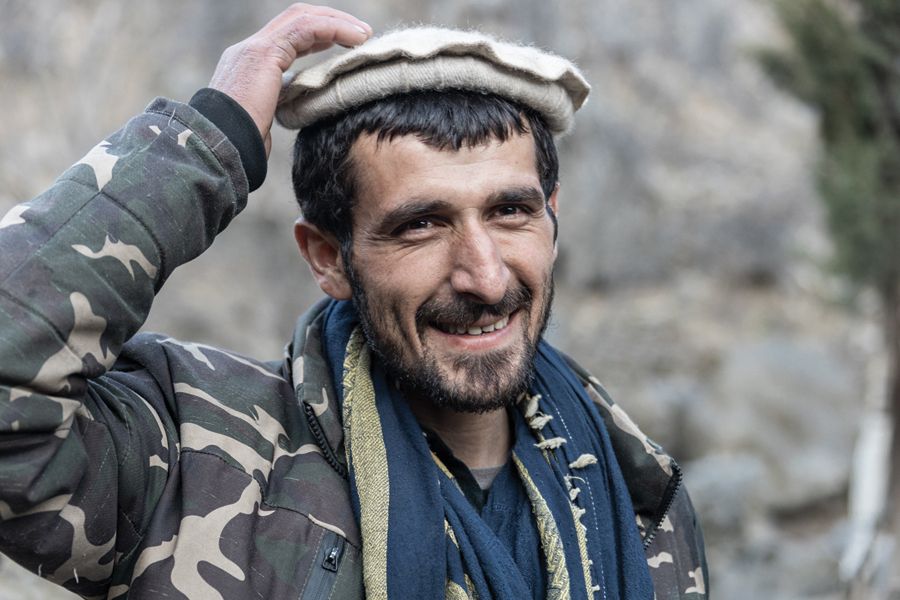
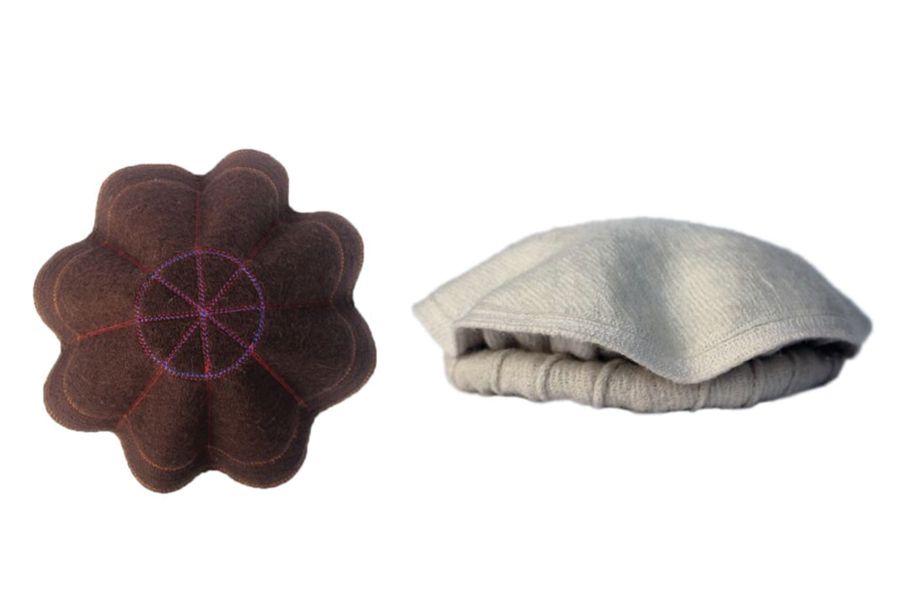
The Pakol is hand-knitted by skilled craftsmen using elaborate designs highlighting their skills and attention to detail. Its rustic appeal is further enhanced using earthy hues in brown, gray, and black colors. The Afghan Pakol is renowned for its distinct shape, characterized by a round crown and a rolled brim. The Pakol is a valuable and practical item for everyday life in Afghanistan because of its adaptability.
Afghan Pakol is made in different shapes and designs, reflecting cultural diversity and environmental conditions in Afghanistan. The most famous styles of Afghan Pakol include Plain Pakol, Twisted Pakol (double-layered common for festivals), Floral Waziristani Pakol (embroidered style from Waziristan), Kandahari Pakol (common in Kandahar), and Markhor Chitral Pakol (a unique shape with feathers). Each type of Afghan Pakol has its own allure and carries cultural significance. Crafted from premium wool, this hat offers warmth and weather protection. It may be worn in various ways to suit the wearer’s tastes and requirements. In colder locations, the crown can be sculpted and curved to offer additional warmth, and the brim can be adjusted to provide facial protection from the sun or wind.
Significance of Afghan Pakol
The Afghan Pakol is more than simply a hat; it has profound cultural significance. It is considered a symbol of Afghan identity, resilience, and tribal heritage. Wearing the Pakol is a common method for Afghans to show their pride in their country and heritage. It is frequently embellished with ornamental components, such as feathers or emblems, that denote tribal affiliations or individual accomplishments. The Afghan Pakol has transcended its cultural boundaries and captivated individuals worldwide. It has gained popularity as a fashion statement, embraced by adventurers, fashion enthusiasts, and even celebrities. The hat’s unique design and rich cultural heritage have contributed to its global appeal. By donning the Afghan Pakol, people showcase their sense of style and pay homage to Afghan craftsmanship and cultural traditions.
The Afghan Pakol is a beautiful example of Afghanistan’s rich cultural history. In addition to serving as a useful headgear item, it also represents the resilience, diversity, and unity of the Afghan people. Let us acknowledge and value the Afghan Pakol as a material representation of Afghan culture, history, and identity as we celebrate the cultural variety and welcome traditional craftsmanship.
Aseel Pakol Shops:
What Decides the Price of a Pakol
Everything above is why the pakol matters. What follows is how to buy one well, because two caps that look identical in a photograph can differ several times over in price, and three things account for almost all of that gap.
The first is the wool itself. Sheep wool, lamb wool and camel wool all behave differently, and the fineness of the fleece sets both the softness and the cost. The second is whether the cap was hand rolled and hand finished by a maker or produced on a machine, which is the difference between a piece that takes a craftsperson hours and one that takes minutes. The third is whether it is wool at all, because acrylic caps are sold in the same photographs at wool prices more often than anyone likes to admit.
Real Wool or Acrylic: How to Check
This is the single most useful thing to know before you order a pakol online, and three of the four checks can be done before you pay.
Look at the colour depth in a close photograph. Natural wool varies slightly across the surface because the fleece itself varies, and that faint unevenness is a good sign. Acrylic is flatly, perfectly uniform. Then look at the surface texture. Wool shows short fibres standing up off the body of the cap and reads matte. Acrylic looks smoother and picks up a slight shine under direct light. Then simply ask, in writing, what the fibre is and whether it is sheep, lamb or camel. A seller who works with the maker answers that in one line. A reseller who bought a box hesitates.
The fourth check happens when the cap arrives. Wool has real weight, a dry springy feel, and it recovers its shape when you crush it in your fist and let go. Acrylic feels light and slick and holds the crease. Wool also smells faintly of wool when it is damp, which acrylic never does.
Acrylic pakols are not a problem in themselves. They are only a problem at a wool price.
Which Style to Buy First
The five styles above are not interchangeable in use, and if this is your first pakol the choice is easier than it looks.
| Style | Character | Buy it for |
|---|---|---|
| Plain | Clean, understated | First pakol, daily |
| Twisted | Textured crown | Everyday, warmth |
| Floral Waziristani | Decorative pattern | Standing out |
| Kandahari | Southern profile | Formal wear |
| Markhor Chitral | Feather detail | Occasions, gifting |
Start with Plain or Twisted. Both go with everything, both take daily wear without looking tired, and both read correctly whether you are wearing a perahan tunban or a western overcoat. Floral Waziristani and Markhor Chitral are better as a second cap, when you already know how you like to wear one. Kandahari is the closest the pakol range comes to formal.
Sizing a Cap Sold as One Size
Most pakols are listed as one size, and that is broadly honest, because wool gives and many caps have an internal string that pulls the fit in. Broadly honest is not always right, so measure once and save yourself a return.
Run a tape around your head about a centimetre above the ears, level, across the widest part of the back of the skull. Most one-size pakols sit comfortably on heads between roughly 56 and 60 centimetres. If you measure below 55 or above 61, ask the maker for the cap's actual internal circumference before ordering rather than hoping.
Two things worth knowing. A wool pakol relaxes slightly with wear, so snug on the first day is usually correct and loose on the first day only gets looser. And wearing the brim rolled down over the ears uses up a little more of the cap, so a very tight fit costs you the option you probably bought it for.
How to Wear It: Rolling the Brim
The rolled brim is not decoration, it is the adjustment. Unroll it fully and it covers the ears and the nape of the neck, which is what makes a pakol genuinely warm rather than merely traditional. Roll it up tight and it sits as a shallow flat cap for mild weather.
Most wearers settle somewhere between the two and keep it there, and the amount of roll becomes a personal signature more than a rule. Set the crown flat on the head rather than peaked, and let the brim sit level. If the cap is new and the wool is still stiff, work the roll with your hands for a minute and it will hold the shape you give it.
Colours, and What They Go With
The traditional palette is the natural and near-natural range: undyed cream and ivory, mid grey, charcoal, brown, black, and the warm reddish brown that comes from walnut dye. Those are the shades the makers produce in volume and the ones that sit correctly with the rest of an Afghan wardrobe.
For a first cap, mid grey or brown. Both are forgiving, both hide wear, and both work across every outfit you already own. Cream and ivory are the most beautiful of the range and show every mark, so they reward being a second purchase. Black is the most formal end of the pakol register.
The Afghan Karakul, and How It Differs
The karakul is the other hat people mean when they say Afghan hat, and it belongs to a completely different register from the pakol. Where the pakol is soft wool built for mountain mornings, the karakul is structured fur built for cities, offices and ceremonies. Understanding the difference stops you buying the wrong one.
What a Karakul Is Made From
The karakul takes its name from the karakul sheep, a Central Asian breed named after Qorakoʻl, a town in the Bukhara region of Uzbekistan, where the animals have been raised for thousands of years. The hat is made from the pelt rather than from spun wool, which is why it holds a rigid shape instead of adapting to the head.
The trade uses several names for the same material. Astrakhan, Persian lamb, krimmer and swakara all refer to karakul pelt. A finer and considerably more expensive grade is called karakulcha, also sold as broadtail or Breitschwanz.
Buyers deserve the full picture on this, so plainly: the tight black curl that gives karakul its look only exists in the first days of life, so lambs are pelted at under three days old, and the karakulcha grade comes from fetal lambs. Some buyers are entirely comfortable with that as a traditional pastoral product, and others are not. Both positions are reasonable, and anyone choosing between a fur karakul and a wool pakol should know which one they are actually buying before they order.


The Shape, the Colours and the Names
A karakul is peaked, and it folds flat when it is taken off, which is one of its quiet virtues for travel. It is worn in conservative colours: black, charcoal, grey, dark brown, and occasionally a golden tone that commands a premium.
The craft spread from Bukhara into Afghanistan and became strongly associated with Mazar-i-Sharif, and Uzbek craftsmen later carried it into Pakistan, where it picked up the name Jinnah cap after Muhammad Ali Jinnah wore it. In Afghanistan the hat is most recognisable internationally from Hamid Karzai, who wore a grey karakul through his years as president, and it is worth noting that he paired it with a chapan rather than with a pakol, which tells you exactly which register each piece belongs to.
Honest context on availability: for most of the twentieth century the karakul marked educated urban men across Afghanistan and Pakistan, and it has since fallen out of everyday fashion in both countries. It survives as formal and ceremonial wear rather than as something you will see on a street in Kabul the way you will see a pakol.
Which One You Actually Want
| Feature | Pakol | Karakul |
|---|---|---|
| Material | Rolled sheep wool | Karakul lamb pelt |
| Shape | Flat round crown | Peaked, folds flat |
| Brim | Rolled, adjusts | None, fixed |
| Warmth | High, covers ears | Moderate |
| Fit | One size, gives | Sized, no give |
| Reads as | Everyday, rural | Formal, urban |
| Wear it with | Patu, wool coat | Chapan, suit |
| Care | Hand wash cool | Furrier only |
| Price | Lower | Higher |
The pakol is the better first Afghan hat for almost everyone, and it is not a close call. It costs less, it is warmer, it adjusts to your head, it packs flat, it can be washed at home, and it is worn far more widely today. The karakul earns its place when the occasion is formal, when you are pairing it with a chapan or a suit, or when you already own a pakol and want the other half of the wardrobe. The one combination to avoid is a pakol with a formal suit, and that gap is precisely what the karakul fills.
Sizing and Caring for a Karakul
Karakul sizing is unforgiving in a way pakol sizing is not, because pelt does not stretch. Measure your head circumference a centimetre above the ears and buy to that number rather than rounding. A karakul that is slightly too small will never break in.
Care is specialist. Do not wash it, do not steam it, and do not let it get soaked. Brush it gently along the direction of the curl to lift dust, let it dry naturally and slowly if it does get wet, and take it to a furrier for anything more. Store it in a cool place with air around it, never sealed in plastic, and never crushed under other things, because a flattened peak does not recover on its own.
What to Wear It With
The pakol sits at the top of a layered outfit. Under it, a perahan tunban in cotton or a wool blend. Over the shoulders, a patu, the thick wool shawl that doubles as a blanket and a prayer mat, which is the natural pairing because both pieces are wool and both are made for the same weather. In the north, a chapan over everything.
It also works entirely outside that context. Grey or brown wool with a heavy overcoat and a scarf is a completely wearable winter combination in any city, and the flat crown reads closer to a beret than to anything costume-like, which is why the cap has quietly circulated in western wardrobes for decades.
Can Women and Children Wear a Pakol?
Yes to both. The pakol is worn mostly by men in Afghanistan, but nothing in the garment restricts it, and there is steady demand for caps for women and for children.
For a child, measure rather than guess, because the standard one-size range starts above most children's head circumference. Ask the maker for a smaller size before ordering. The cap is unstructured enough that a well-measured one fits a wide range of heads and hair.
Washing and Storing a Wool Pakol
Hand wash in cool water with a wool detergent. Never hot water, which felts wool permanently and shrinks the cap into something hard and small. Do not wring it. Press the water out between two towels instead.
Dry it flat, and dry it in the shape you want it to keep, because wet wool stretches under its own weight and a pakol hung on a hook while damp comes back longer and looser than it went in. Reshape the crown by hand while it is still damp and leave it flat on a towel away from direct heat.
Store it flat rather than crushed, with cedar or lavender nearby, because wool moths are the only real threat to a pakol. Cared for that way it will outlast most of what is in your wardrobe.
What to Ask Before You Order
Three questions separate a good purchase from a guess. What is the fibre, and is it sheep, lamb or camel wool? Is the cap hand rolled or machine made? And what is the internal circumference in centimetres?
On Aseel every pakol is listed under the artisan or artisan shop that made it, so those answers come from the maker rather than from a middleman. Nuristan Fashion and Ahmadi Fur both make caps by hand, and you can see whose work you are buying before you order.
Frequently Asked Questions
How do I know if a pakol is real wool?
Look for slight colour variation across the surface and short fibres standing off the body of the cap, and ask the seller for the fibre in writing. Once it arrives, wool feels dry and springy, has real weight, and recovers its shape after being crushed. Acrylic is lighter, slicker and stays creased.
What size pakol should I order?
Measure your head circumference a centimetre above the ears, level, around the widest part of the skull. Most one-size pakols cover roughly 56 to 60 centimetres. Outside that range, ask for the cap's internal measurement first.
How do you wear a pakol rolled down?
Unroll the brim so it covers the ears and the nape of the neck, then set the crown flat rather than peaked. Rolled up it sits as a shallow cap. Most wearers find a point between the two and keep it there.
Is a pakol warm?
Yes, and the brim is why. Rolled down it covers the ears and neck, where most heat is lost, and dense wool holds warmth even when slightly damp.
What is the difference between a pakol and a Chitrali cap?
They are the same cap under two names. Chitrali refers to the valley the style is most associated with, and pakol is the name used across Afghanistan. You will see both words in listings, sometimes together.
What is the difference between a pakol and a karakul?
A pakol is soft rolled wool with a flat crown and an adjustable brim, worn daily and built for cold. A karakul is stiff lamb pelt with a tall peaked crown, worn formally, in conservative colours, at a higher price.
What is a karakul hat made of?
It is made from the pelt of the karakul sheep, a Central Asian breed named after Qorakoʻl in Uzbekistan. The material is also sold as astrakhan or Persian lamb, and a finer fetal grade is called karakulcha or broadtail. Lambs are pelted within their first three days, which is when the tight curl exists, so this is a fur product rather than a wool one.
Why is a karakul more expensive than a pakol?
The material costs far more, the hat is built rather than rolled, and it must be sized precisely. A pakol is spun sheep wool worked by hand into a cap that fits a range of heads. A karakul is a structured pelt hat that fits one head size and needs a furrier to maintain.
Which pakol style should I buy first?
Plain or Twisted. Both are versatile, both take daily wear well, and both suit traditional and western outfits equally. Save Floral Waziristani and Markhor Chitral for a second cap.
Can I wash a pakol in the machine?
No. Hot water and agitation felt wool permanently and the cap will shrink and harden. Hand wash cool, press the water out between towels, reshape while damp and dry flat.
How much should a pakol cost?
Price follows three things: whether it is wool or acrylic, which wool, and whether it was hand rolled or machine made. Hand-rolled local wool sits at the top of the range and machine-made acrylic at the bottom. Check current listings rather than any figure quoted in an article, and treat a wool price on an unnamed fibre as a question to ask.
Where to Buy Your Pakol
If you have your head measurement and you have settled on wool, you are ready. Browse the Afghan Pakol Hats category, where every cap is listed under the maker, or go straight to the shops at Aseel. For a first cap, Plain or Twisted in mid grey or brown will get the most wear.
Aseel does not currently list a karakul category, so if a fur karakul is what you are after, message the shops directly and ask what they have rather than ordering an unnamed pelt from a marketplace listing.
Pair it with a patu, the wool shawl that works as a blanket and a prayer mat. If you are building the full outfit, start with your first perahan tunban. For the northern coat, see our chapan guide. If you want the formal Afghan hat instead, our karakul buying guide covers grades, sizing and care in full. And for the whole wardrobe, read the main guide to Afghan clothing.1234

Afghan Handmade Pakols and Karakul Hats
Add More to Your Fashion With Afghan Hats This Winter
Buy NowMedia Inquiries
For media inquiries, press requests, or interview opportunities related to this article or Aseel, please contact:
About Aseel
Aseel is a tech-driven startup providing a digital marketplace where artisans can sell their one-of-a-kind handcrafted products while supporting humanitarian efforts worldwide. We champion using practical skills to create the positive impact businesses and communities deserve. Aseel's intuitive platform empowers thousands of makers by connecting them with a global audience. Transparency and privacy are at the heart of everything we do. Our dedicated customer service team is available anytime to assist clients through our secure and protected platform.
Follow Aseel on Google
Add Aseel as a preferred source on Google to see more of our stories in your Search results.