Afghan Rugs: The Complete Guide to Types, History, Authenticity, Care and Where to Buy

Apr 05, 2026
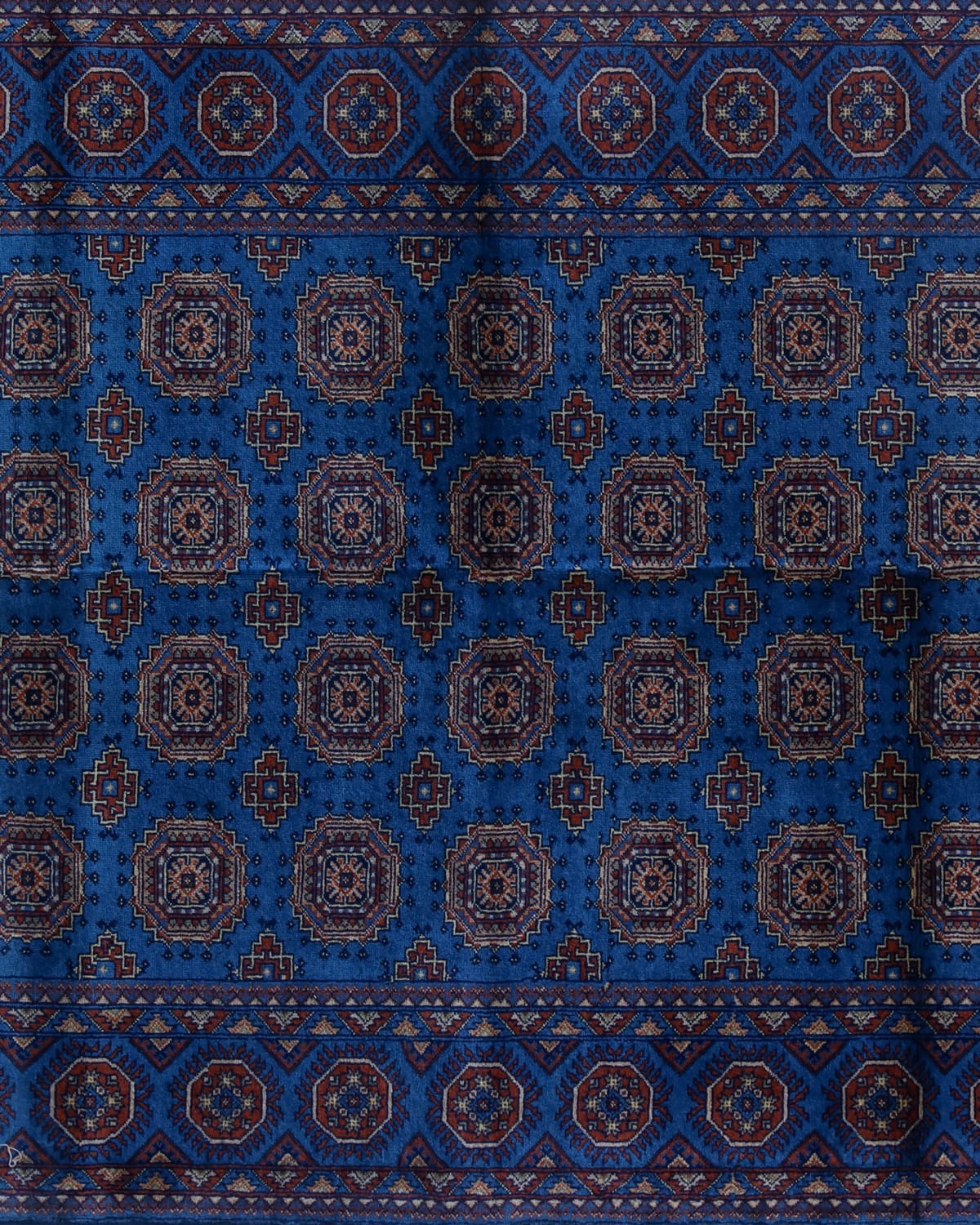
Afghan rugs are more than floor coverings. They are hand-knotted pieces of living history, woven by skilled artisans in Afghanistan whose craft has been passed down across generations. Whether you are buying your first Afghan rug or adding to a growing collection, this guide gives you everything you need to choose wisely, buy authentically, and care for your piece so it lasts a lifetime. You will learn about the history behind Afghan rugs, the most popular types and what makes each unique, how to tell a genuine handmade rug from an imitation, what the patterns actually mean, how to care for your rug, and exactly where to buy authentic Afghan rugs directly from the artisans who make them. Browse the full collection of handmade Afghan rugs on Aseel here:
QUICK ANSWER: What Are Afghan Rugs?
Afghan rugs are hand-knotted or flat-woven floor coverings made by skilled artisans in Afghanistan. They are crafted from 100% natural wool using techniques that have not changed for centuries, dyed with plant-based natural pigments, and decorated with bold geometric patterns rooted in the tribal traditions of Turkmen, Baluch, Hazara, and Uzbek weavers. Afghan rugs are internationally recognized for their durability, cultural depth, and long-term value. The most common types include Bokhara, Kilim, Baluch, Ersari, Mamluk, and Ziegler (Chobi) rugs.
The Rich History of Afghan Rugs
Afghanistan has been one of the world's most important rug-producing regions for more than two thousand years. The country sits at the heart of the ancient Silk Road, the trade network connecting China, Persia, Central Asia, and the Mediterranean world. Afghan weavers absorbed influences from each of these civilizations while developing their own distinct tribal traditions, and the result is one of the most diverse and extraordinary weaving cultures on earth. Afghan rug making is deeply communal and largely domestic. Most rugs are woven by women working on hand-built looms in their homes or in small village workshops. The craft passes from mother to daughter across generations, preserving not just technique but also pattern libraries, color traditions, and the symbolic vocabulary of each tribal group. The Turkmen tribes of northern Afghanistan, the Baluch weavers near the Iranian border, the Hazara artisans of central Afghanistan, and the Uzbek and Tajik weavers of the north all contribute distinct regional styles. This diversity is one of the great strengths of Afghan rug making. No two rugs are ever exactly alike, and each piece carries the identity of the community that created it. Rugs from Afghanistan have been traded across the globe for centuries. They appear in European royal collections, Ottoman palaces, and the homes of Mughal emperors. Today, Afghan rugs continue to be exported worldwide, with demand growing steadily as buyers increasingly seek out authentic, ethically sourced handmade goods over mass-produced alternatives.
Types of Afghan Rugs: A Complete Breakdown
Understanding the main types of Afghan rugs is the single most useful thing you can do before making a purchase. Each style has a distinct visual character, origin story, and range of uses.
Bokhara Rugs
Bokhara rugs are the most recognizable Afghan rug style in the Western market. They feature repeating rows of octagonal medallions called guls arranged across a deep red or burgundy field. The name comes from the ancient Silk Road city of Bukhara in modern Uzbekistan, but the rugs sold under this name today are woven almost entirely in Afghanistan and Pakistan by Turkmen tribal weavers. Genuine Afghan Bokhara rugs use hand-spun 100% wool with natural or vegetable-based dyes. The knot count is high, producing a dense, durable pile that holds its shape for decades. These rugs suit traditional, transitional, and modern interiors and remain one of the best-value hand-knotted rugs available anywhere in the world.

Afghan Kilim Rugs
Kilims are flat-woven rugs, meaning they have no pile at all. Afghan kilims, particularly those from the Maymana region in northwestern Afghanistan, are celebrated for their vibrant colors and bold geometric patterns. Because kilims are thinner and lighter than pile rugs, they work beautifully as wall hangings, accent pieces, or lightweight floor coverings. Traditional Maymana kilims feature bright reds and oranges with strong contrasting outlines, making them visually striking even in simple spaces. They are among the most affordable authentic Afghan textiles available, making them an excellent starting point for new buyers.

Baluch Rugs
Baluch rugs come from the Baluch tribal people who live near the Afghanistan-Iran border. These rugs are typically smaller in format and feature dark, earthy color palettes - deep reds, dark blues, black, and ivory. Designs are highly tribal and abstract, often featuring prayer arch (mihrab) motifs that reflect the weaver's Islamic tradition. Baluch rugs are among the most collectible Afghan pieces precisely because of their raw authenticity. Their tight knot structure and dense natural wool make them exceptionally durable despite their modest size.
Ersari Rugs
Ersari rugs come from the Ersari Turkmen tribe and feature large, bold gul medallions on fields of deep red, navy, or ivory. They tend to be larger format pieces well-suited to living rooms and dining rooms. Ersari rugs are relatively less common in the mainstream market, making them particularly valued by collectors who seek pieces with strong tribal character.
Beshir Rugs
Beshir rugs, also Turkmen in origin, are distinctive for their more flowing designs that blend geometric elements with subtle floral influences. Their color palettes tend toward rich jewel tones - deep blues, forest greens, and warm reds - and their patterns have a slightly more ornate quality than standard Bokhara designs. Beshir rugs are rare and highly prized by serious collectors.
Mamluk Rugs
The Mamluk design revives the royal Cairo court rug tradition of the 15th and 16th centuries. Afghan artisans produce stunning contemporary versions of this style featuring complex star-shaped medallions, kaleidoscopic geometric patterns, and rich jewel-toned color palettes. Mamluk-style Afghan rugs are the choice for buyers who want something visually dramatic in a formal living room or dining space.
Khorjin (Saddle Bag) Rugs
Khorjin are traditional double saddle bags historically used by nomadic tribes to carry goods on horseback. Today, Afghan artisans produce decorative flat Khorjin panels and complete double-bag sets prized for their intricate small-scale patterns and vivid color combinations. They work exceptionally well as unique wall hangings or accent pieces.
Ziegler and Chobi Afghan Rugs
Not every Afghan rug follows a strictly traditional tribal format. Over the past several decades, a category of transitional and contemporary Afghan rugs has emerged specifically designed to suit modern Western interiors. These pieces, known as Ziegler or Chobi rugs, feature oversized floral patterns in muted palettes of sage green, dusty ivory, soft terracotta, and slate blue. They are woven in Afghanistan using vegetable dyes and hand-spun wool, meaning they are fully authentic handmade products despite their contemporary aesthetic. Chobi rugs work beautifully in modern farmhouse, Scandinavian, and transitional interior styles.
How to Identify an Authentic Afghan Rug
The handmade status of an Afghan rug is not just a marketing claim. It has direct implications for quality, durability, and long-term value. Here is how to tell a genuine hand-knotted Afghan rug from a machine-made imitation. Examine the back of the rug. On a genuine hand-knotted Afghan rug, you will see the structure of individual knots forming the pattern. The design on the back should be a slightly softer mirror image of the front. Machine-made rugs have a perfectly uniform, canvas-like backing that feels stiff and shows no individual knot texture. Check the fringe. On a genuine hand-knotted rug, the fringe is a direct extension of the rug's warp threads. It grows from the structure of the rug itself and cannot be separated from it. On machine-made imitations, fringe is typically sewn or glued on as a separate decorative addition. Feel the pile material. Hand-spun wool has a slight natural irregularity in thickness that catches the light beautifully and creates a living, lustrous quality that synthetic fibers cannot replicate. Run your fingers across the pile. If it feels uniformly flat and slightly stiff, the rug is likely synthetic or machine-made. Look for minor natural imperfections. A machine cannot produce a perfect handmade rug. Authentic Afghan rugs may have very slight variations in pattern symmetry, small differences in pile height across the surface, or subtle color gradations where the dye lot changed during weaving. These color gradations are called abrash. They are not defects. They are proof of humanity. Assess the weight. Hand-knotted Afghan rugs are significantly heavier than machine-made alternatives of the same size because they are built from dense, tightly knotted natural wool. If a rug feels surprisingly light for its dimensions, treat that as a warning sign. Ask about the origin. Any reputable seller of authentic Afghan rugs should be able to tell you the regional origin of the rug, the tribal tradition it represents, and ideally the general type of dye used. Vague answers or evasion on these questions are red flags.
Afghan Rug Patterns and What They Mean
One of the most fascinating dimensions of Afghan rugs is the symbolic language embedded in their designs. Most buyers never learn this, but understanding it transforms your experience of owning a rug. The gul is the defining motif of Turkmen rugs. Each tribal group has its own distinctive gul - the Tekke gul, the Yomud gul, the Ersari gul - and historically these symbols functioned as tribal crests or heraldic emblems. Each gul identifies the weaver's tribe and lineage. When you choose a rug with a specific tribal gul, you are choosing a connection to that tribe's centuries-long artistic tradition. The boteh motif, similar in appearance to the paisley shape, represents a teardrop or flame form that appears across Afghan, Persian, and Indian textile traditions. It carries associations with the Zoroastrian sacred flame, with concepts of life, eternity, and the flow of rivers. Tree of Life patterns symbolize the connection between earth and heaven, between mortality and the eternal. They appear frequently in Afghan prayer rugs and in many Baluch-style pieces. Geometric border systems in Afghan rugs are not merely decorative frames. In traditional belief, they serve a protective function, acting as symbolic guardians of the sacred central field. Prayer rugs, recognizable by their mihrab or prayer arch motif pointing toward Mecca, are among the most personal and culturally significant Afghan textiles. They were made to be used in daily Islamic prayer and carry deep spiritual meaning for the weaver. Understanding this symbolic vocabulary gives you an entirely different relationship with your rug. You are not simply selecting a color palette. You are entering into a conversation with a culture, a history, and a specific human creative tradition.
Natural Dyes vs. Synthetic Dyes: Why It Matters
Color is one of the most important quality indicators in any Afghan rug, and the source of that color has profound implications for both beauty and longevity. Authentic Afghan rugs traditionally use vegetable and natural dyes derived from plants, insects, and minerals. Pomegranate rinds and walnut husks produce warm browns and tans. Madder root yields the rich reds that define so many Afghan rug palettes. Natural indigo produces the deep blues characteristic of Turkmen and Ersari pieces. Saffron and chamomile give yellows and golds. Combining indigo with pomegranate or madder produces complex greens and dark hues. Natural dyes behave differently from synthetic ones over time. Synthetic chemical dyes tend to fade in harsh, uneven ways that damage a rug's beauty. Natural dyes mellow and deepen with age, producing the warm, luminous patina that makes antique and vintage Afghan rugs so highly prized. A well-made Afghan rug colored with natural dyes will look richer and more beautiful at forty years old than it did the day it was woven. Contemporary Afghan rug producers, particularly those making Ziegler-style Chobi rugs, have returned to natural and vegetable dye traditions as part of a broader commitment to quality and sustainability. When you shop, always ask whether a rug uses natural or synthetic dyes. It is one of the most meaningful quality questions you can raise.
Afghan Rugs vs. Persian Rugs: Key Differences
Buyers frequently compare Afghan rugs with Persian rugs, and understanding the differences helps you make a more informed choice. Afghan rugs come from Afghanistan and reflect the distinct weaving traditions of Turkmen, Baluch, Hazara, and Uzbek tribal groups. They typically feature bold geometric patterns, coarser hand-spun wool, and a characteristic matte, earthy texture with natural color depth. Persian rugs come from Iran and encompass an enormous range of regional styles from cities like Isfahan, Kashan, Tabriz, and Kerman, as well as from tribal areas. Persian city rugs often feature intricate curvilinear floral designs woven from machine-spun wool or silk on a fine-knot foundation. In practical terms, Afghan rugs are generally more affordable than Persian rugs of comparable quality, size, and knot density. This gap exists largely because Persian rugs have enjoyed longer and more aggressive luxury branding in Western markets, not because they are inherently superior as products. For buyers who prioritize quality and value, authentic Afghan rugs represent an exceptional opportunity. In terms of durability, the coarser hand-spun wool used in most Afghan rugs is highly resilient and resistant to crushing under foot traffic. A quality Afghan rug in a high-traffic living room will hold its pile and structural integrity far better than a machine-spun wool rug of any origin.
How to Choose the Right Afghan Rug for Your Space
Selecting the right Afghan rug involves balancing visual taste with practical considerations. This framework will help you make the decision confidently. Start with size. The most common and costly decorating mistake is choosing a rug that is too small for the space. In a living room, your rug should be large enough for the front legs of all your main seating pieces to rest on it. An 8x10 or 9x12 is standard for a medium-to-large living room. In a dining room, the rug must extend at least 24 inches beyond the table edge on all sides so that chair legs remain on the rug when pulled out. In a bedroom, place a rug large enough to extend at least 18 to 24 inches beyond the sides and foot of the bed. When in doubt, size up. Consider your color palette. The deep reds, navy blues, and warm burnt oranges of traditional Afghan rugs work beautifully with warm wood tones, leather furniture, and neutral walls. Contemporary Ziegler-style Afghan rugs in sage green, dusty ivory, and soft terracotta suit lighter, more minimal modern interiors. Let the rug anchor the room's color story rather than fight against it. Think about pile height and traffic. High-pile Afghan rugs are luxurious underfoot but require more frequent maintenance. Low-pile rugs wear better in high-traffic areas and are easier to clean. Kilims, being flat-woven, are the most practical choice for hallways, dining rooms, and spaces with children or pets. Match pattern weight to room complexity. A bold tribal Afghan rug with strong geometric patterning works best in a room with relatively simple, uncompeting furniture and neutral walls. If your room already has patterned upholstery or strong wallpaper, choose a more subtle Afghan rug in a contemporary Chobi or transitional style to create visual harmony. Plan for generational ownership. A quality hand-knotted Afghan rug is not a seasonal purchase. It is an object you will own and love for decades. Choose a piece that reflects lasting taste rather than this month's trend cycle. You can explore authentic options organized by size and design here: https://aseelapp.com/shop-category/afghan-handmade-carpets-rugs-152
Afghan Rug Care Guide: How to Keep Your Rug Beautiful for Generations
Hand-knotted Afghan rugs are among the most durable floor coverings in the world. With the right care, they will outlast every other soft furnishing in your home. Follow these guidelines to protect your investment. Rotate your rug regularly. Turn your Afghan rug 180 degrees every six to twelve months. This ensures that foot traffic and sunlight exposure wear the rug evenly across its entire surface rather than damaging just one area. Rotation is the single most effective maintenance habit for extending a rug's life. Vacuum with care. Vacuum your Afghan rug at least once a week in high-traffic areas and every two weeks elsewhere. Always vacuum in the direction of the pile, never against it. Avoid the fringe entirely - vacuum brush rollers can tangle and pull fringe threads. Do not use a beater bar attachment, which can loosen knots over time. Use a quality rug pad. A rug pad serves three essential functions: it prevents the rug from slipping on hard floors, it cushions the pile and reduces wear from below, and it allows air to circulate between the rug and the floor surface, preventing moisture buildup. Act immediately on spills. Blot, never rub. Use a clean white cloth and work from the outer edge of the spill inward to contain it. For solid spills, gently scoop up the material first. Avoid chemical household cleaners, which can strip natural dyes and damage wool fibers. Schedule professional cleaning every three to five years. A professional hand wash removes the deep grit and soil that settles at the base of the pile over time and cannot be reached by vacuum. Professional cleaning also revitalizes wool fibers and refreshes the depth of natural dye colors. Never machine-wash a hand-knotted Afghan rug. Store correctly when not in use. If you need to store your rug, clean it first. Then roll it with the pile facing inward around an acid-free tube, wrap it in breathable cotton sheeting (not plastic, which traps moisture), and store it flat or upright in a cool, dry location away from temperature extremes and humidity.
Fair Trade and Ethical Sourcing: The Hidden Dimension of Every Afghan Rug Purchase
The Afghan rug industry supports tens of thousands of weavers, the vast majority of whom are women working from their homes in rural and semi-urban communities. When you purchase an authentic Afghan rug from an ethically sourced retailer, your money flows directly to these artisans, supporting their livelihoods and incentivizing the continuation of a traditional craft that would otherwise be lost to economic pressure. Organizations like GoodWeave International certify rugs produced without child labor, with fair wages for adult weavers, and under safe working conditions. GoodWeave-certified rugs carry a registered mark that buyers can independently verify. If ethical sourcing matters to you - and it should - look for this certification or for retailers who can clearly explain their direct sourcing practices and their ongoing relationships with weaving communities. Some Afghan rug platforms, including Aseel, source directly from Afghanistan, bypassing multiple layers of middlemen and ensuring that a meaningfully greater share of each sale reaches the weaver. This model supports not only fair wages but also cultural preservation, giving skilled artisans a reason to continue practicing traditional techniques rather than abandoning them for other work. At Aseel, every purchase in the Afghan rugs collection supports artisan families in Afghanistan directly. You can shop with confidence that your rug carries both cultural authenticity and ethical provenance: https://aseelapp.com/buy-good
Are Afghan Rugs a Good Investment?
Yes. High-quality hand-knotted Afghan rugs are one of the few home furnishing categories where value can be maintained or even grow over time. Unlike sofas, curtains, or mass-produced floor coverings, which depreciate immediately, a well-made Afghan rug with natural dyes, high knot count, and documented tribal origin is a collectible object with a finite supply. Antique Afghan and Turkmen tribal rugs, defined as pieces more than 80 to 100 years old, regularly achieve strong prices at specialist rug auctions. Semi-antique pieces from the mid-20th century have seen steady appreciation as global supply of authentic tribal-era rugs continues to shrink. The key to purchasing a rug that holds its value is quality. A genuinely hand-knotted Afghan rug with natural dyes, fine hand-spun wool, and a traceable tribal origin is a meaningful long-term investment. A lower-quality piece - even one technically labeled handmade - will not hold its value in the same way. If you are buying with investment intent, focus on pieces from recognized tribal traditions with documented provenance, rugs in excellent structural condition with vibrant unfaded natural colors, and antique or semi-antique pieces where the supply is genuinely limited.
Red Flags to Avoid When Buying Afghan Rugs
The handmade rug market contains significant misrepresentation at its lower end, both online and in physical stores. Here are the warning signs that should make you pause before purchasing. A seller who cannot tell you where and by whom the rug was made. Reputable sellers of authentic Afghan rugs know their supply chain. Vague descriptions like "oriental rug" or "handmade tribal rug" without specific regional or tribal origin information are a serious concern. Prices that seem too low for the stated quality. A genuine hand-knotted 8x10 Afghan rug requires hundreds of hours of skilled labor. Quality pieces in this size typically start at $1,000 and can reach $5,000 or more depending on knot count, dye quality, and design complexity. A pristine-looking 8x10 rug offered at $150 or $200 as "handmade" is almost certainly machine-made. A synthetic or coated sheen on the pile. Some sellers apply chemical washes to machine-made rugs to give them the visual appearance of aged, lustrous wool. Run your fingernails lightly across the pile. If the surface feels coated rather than naturally fibrous, or if it leaves a mark that remains, treat that as a warning sign. Perfectly uniform fringe. Authentic fringe grows directly from the rug's warp threads and has subtle natural variation. Factory-perfect, completely uniform fringe indicates it has been sewn or glued on as a decoration. No return policy or authentication process. Every legitimate Afghan rug retailer stands behind their product with a clear return window. The absence of a return policy is a significant warning signal that the seller is not confident in what they are selling.
Where to Buy Authentic Afghan Rugs
Aseel is a platform dedicated to connecting global buyers directly with artisans in Afghanistan. Every Afghan rug on Aseel is sourced directly from weavers, ensuring authenticity, fair compensation for artisans, and full supply chain transparency. Unlike generic online marketplaces where provenance is unclear, Aseel provides a direct bridge between Afghan craftspeople and buyers who care about quality and impact. You can browse the complete collection of authentic handmade Afghan rugs organized by design, size, and style here: https://aseelapp.com/shop-category/afghan-handmade-carpets-rugs-152 Every purchase you make through Aseel contributes directly to artisan families in Afghanistan. When you shop on Aseel's Buy Good platform, you are participating in a model of ethical commerce designed to put purchasing power back in the hands of the communities that create these extraordinary pieces: https://aseelapp.com/buy-good
FAQ: Afghan Rugs — Expert Answers
What are Afghan rugs?
Afghan rugs are hand-knotted or flat-woven floor coverings made by skilled artisans in Afghanistan using 100% natural wool, traditional knotting techniques, and natural plant-based dyes. They are defined by bold geometric patterns rooted in tribal weaving traditions and are recognized globally for their durability, cultural depth, and long-term value.
How can I tell if an Afghan rug is authentic?
Flip the rug over and look for individual knots visible on the back. Check that the fringe grows directly from the rug's warp threads rather than being sewn on. Feel the pile - hand-spun wool feels naturally irregular, not uniformly smooth. Look for slight pattern imperfections and color gradations called abrash, which confirm handmade origin. Assess the weight - genuine hand-knotted rugs are noticeably heavy.
What are the most popular types of Afghan rugs?
The most popular types are Bokhara rugs (red field with repeating gul medallions), Kilim rugs (flat-woven, vibrant geometric patterns), Baluch rugs (dark earthy tones, tribal and prayer motifs), Ersari rugs (large guls on deep red or navy fields), Mamluk rugs (royal star-medallion designs), Ziegler/Chobi rugs (contemporary floral patterns in muted tones), and Khorjin rugs (decorative saddle bag panels).
How long do Afghan rugs last?
A high-quality hand-knotted Afghan rug made with natural wool and natural dyes will last 50 to 100 years or more with proper care. Many antique Afghan and Turkmen tribal rugs from the late 19th and early 20th century remain in excellent structural condition today.
How do I care for an Afghan rug?
Vacuum weekly in the direction of the pile without a beater bar. Rotate the rug 180 degrees every six to twelve months. Use a quality rug pad. Blot spills immediately - never rub. Have the rug professionally washed every three to five years. Store rolled with pile inward, wrapped in breathable cotton, in a cool dry space.
What is the difference between Afghan rugs and Persian rugs?
Afghan rugs come from Afghanistan and reflect Turkmen, Baluch, and Hazara tribal traditions with bold geometric designs and coarse hand-spun wool. Persian rugs come from Iran and often feature curvilinear floral patterns in machine-spun wool or silk. Afghan rugs are generally more affordable than Persian rugs of comparable quality and are often more durable due to their coarser, thicker wool pile.
Where can I buy authentic Afghan rugs online?
You can buy authentic handmade Afghan rugs directly from Afghan artisans on Aseel at https://aseelapp.com/shop-category/afghan-handmade-carpets-rugs-152. Aseel sources rugs directly from weavers in Afghanistan, ensuring fair wages, full authenticity, and direct artisan support with every purchase.
Are Afghan rugs a good investment?
Yes. High-quality hand-knotted Afghan rugs with natural dyes and traceable tribal origins can maintain or increase in value over time. Antique Afghan tribal rugs regularly achieve strong results at specialist auctions. The supply of authentic vintage and antique pieces is finite and continues to shrink, supporting long-term value for quality pieces.
What size Afghan rug should I buy for my living room?
Choose a rug large enough for the front legs of all main seating pieces to rest on it. An 8x10 or 9x12 is standard for a medium-to-large living room. For dining rooms, the rug should extend at least 24 inches beyond all sides of the table. When in doubt, always size up - a rug that is too small is the most common decorating mistake buyers make.
What do the patterns on Afghan rugs mean?
Afghan rug patterns carry deep tribal and cultural significance. The gul (octagonal medallion) identifies the weaver's tribal lineage. The boteh motif symbolizes life and eternity. Tree of Life patterns represent the connection between earth and heaven. Mihrab (prayer arch) patterns indicate prayer rugs with deep spiritual significance. Geometric borders serve symbolic protective functions around the central field.
Do Afghan rugs use natural dyes?
Traditional and quality Afghan rugs use natural vegetable dyes derived from madder root (red), natural indigo (blue), pomegranate rinds (brown), walnut husks (tan), and saffron (yellow and gold). Natural dyes deepen and mellow beautifully with age, unlike synthetic dyes which fade harshly. Always ask about dye type before purchasing - it is one of the most important quality indicators.
The Bottom Line
Afghan rugs are exceptional objects - durable, culturally rich, visually striking, and increasingly rare as authentic handmade production becomes more difficult to sustain under economic pressure. When you buy an Afghan rug from a transparent, ethical source, you are not just furnishing your home. You are supporting a weaver in Afghanistan, preserving a tradition that has survived for two thousand years, and acquiring something that will grow more beautiful with every decade it spends in your space. Explore the full collection of authentic handmade Afghan rugs, sourced directly from Afghan artisans.
And discover the full world of Afghan handmade goods - where every purchase does good -
Visit Aseel at:
About Aseel
Aseel is a tech-driven startup providing a digital marketplace where artisans can sell their one-of-a-kind handcrafted products while supporting humanitarian efforts worldwide. We champion using practical skills to create the positive impact businesses and communities deserve. Aseel's intuitive platform empowers thousands of makers by connecting them with a global audience. Transparency and privacy are at the heart of everything we do. Our dedicated customer service team is available anytime to assist clients through our secure and protected platform.