Afghan Kuchi Dress: Authentic, Handmade Pieces Directly from Afghanistan

Sep 03, 2026
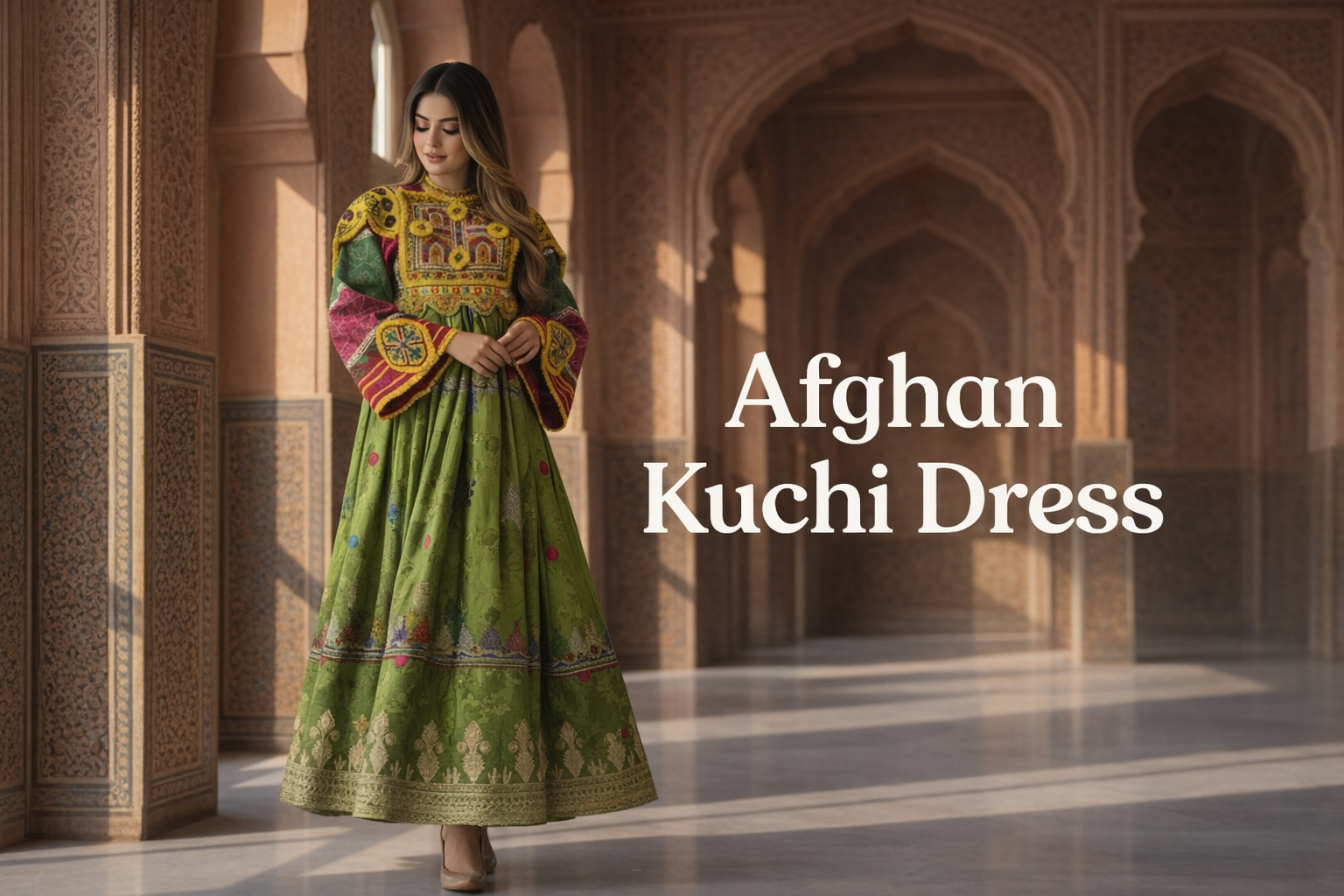
Every Afghan Kuchi dress on Aseel is made by hand inside Afghanistan — stitched, embroidered, and shipped by the artisans who created it. No middlemen. No replicas. No guessing.

What Is an Afghan Kuchi Dress?
The word "Kuchi" comes from the Dari Persian word kuch, meaning migration. It is the common term, used by both Afghans and foreign researchers, for the nomadic and semi-nomadic Pashtun peoples of Afghanistan who have migrated seasonally across the country's mountain routes for centuries. A 2004 national assessment estimated around 2.4 million Kuchis in Afghanistan, with approximately 1.5 million still following a fully nomadic lifestyle at that time.
The Afghan Kuchi dress is the traditional garment worn by Kuchi women — and it is far more than clothing. It is a functional archive of culture. Women of the Kuchi people have historically worn long, hand-embroidered dresses loaded with mirrors, coins, beads, and colored glass. The jewellery and embellishments were not purely decorative: they served as portable wealth, protective amulets, and markers of family identity and purchasing power, with higher concentrations of silver and precious stones indicating greater means.
What makes the Kuchi dress globally distinctive — and why it is searched for, collected, and worn by people across the US, UK, Europe, and the Afghan diaspora — is the specific combination of:
-> Hand embroidery techniques passed down across generations, unique to specific regions and artisan families
-> Mirror work (shesha dozi) that catches light and creates the characteristic shimmer visible in even dimly lit rooms
-> Coin and bead embellishments sewn directly onto velvet or silk fabric
-> Vivid colour combinations — deep purples, eggplant violets, teal, crimson, and emerald — that reflect the landscape and cultural vocabulary of Afghanistan's different provinces
No two authentic Kuchi dresses are identical. That is not a marketing claim. It is a structural reality of handmade garments produced by individual artisans working without industrial patterns.
The Three Embroidery Techniques You Need to Know Before Buying
Understanding what you are buying separates an informed purchase from a disappointing one. The three embroidery styles you will encounter in genuine Afghan Kuchi dresses — and in Aseel's catalogue — are distinct in method, placement, and visual outcome.
Chermaduzi (also spelled Chirma Dozi)
Chermaduzi is leather-strip embroidery — the most structurally unique technique in Afghan textile tradition. Thin strips of leather are stitched directly into the fabric alongside coloured thread, creating a raised, three-dimensional texture that is tactile as well as visual. It is typically applied to the skirt panels, sleeves, and yakhan (collar area). On Aseel, you will find it used on the skirt border and sleeve panels of several velvet dresses, where the leather strips create a geometric relief pattern against the fabric.
Zartar (Zardozi)
Zartar, or Zardozi, is gold-thread embroidery using fine metallic threads, beads, and occasionally small mirrors woven into the design. The name derives from the Persian words for gold (zar) and needlework (dozi). It is the technique associated with formal, bridal, and ceremony-grade Afghan dresses — the type worn at nikah ceremonies, engagements, and weddings. On bridal pieces, Zartar is applied heavily to the chest panel, shoulders, and cuffs. The density and precision of the gold work is the primary quality marker for this style.
Gand Embroidery
Gand is a distinct beadwork-and-thread combination, typically executed across the upper body and shoulder area. It creates a denser, heavier surface than Zartar and is often combined with metal coin embellishments. Aseel carries multiple dresses using Gand embroidery as the primary decorative technique on the top portion of the garment, with Chermaduzi applied to the lower skirt — a combination that is particularly common in dresses from the Kandahar and Helmand regions.
Why this matters when buying: A listing that simply says "embroidered Afghan dress" without specifying the technique cannot be verified as authentic. Aseel's product descriptions name the technique, placement, and materials used — because the artisans who make them provided that information directly.
The Five Types of Afghan Kuchi Dresses — and Which One You Need


Afghan Kuchi Dress Collection Aseel
1. Bridal Kuchi Dress (Wedding / Nikah)
The heaviest and most embellished category. Typically made from deep-coloured silk velvet — most commonly dark blue, eggplant violet, or crimson — with extensive Zartar gold threadwork across the chest, shoulders, and cuffs. Comes as a full three-piece set: qamees (dress), shalwar (trousers), and dupatta (shawl/scarf). The scarf is typically finished with sitara lace or shimmering embellishment borders.
Best for: Afghan and Pashtun weddings, nikah ceremonies, engagement parties, Eid gatherings.
Price range on Aseel: Starting from $73 USD, with heavily embellished bridal sets reaching higher price points depending on the density of handwork.
2. Casual / Cultural Event Kuchi Dress
A lighter version using cotton or mixed fabric rather than velvet, with embroidery concentrated at the collar, cuffs, and skirt hem rather than covering the full garment. Still handmade, still genuinely embroidered — but designed for cultural days, university events, Nowruz celebrations, and everyday cultural wear rather than formal ceremonies.
Best for: Cultural events, school and university Afghan cultural days, Nowruz, Eid casual wear.
3. Attan Dance Dress (Kuchi Attan)
Specifically cut and embellished for Attan — the traditional Pashtun circle dance performed at weddings and cultural celebrations. These dresses feature mirror work (shesha dozi) concentrated on the chest and skirt, designed to catch and reflect light during movement. The silhouette is typically full-skirted with long, wide sleeves.
Best for: Attan performances, stage presentations, weddings where the wearer will be dancing.
4. Vintage Afghan Kuchi Dress
Vintage pieces carry genuine embroidery from previous decades, often with patina on metal embellishments and natural wear consistent with age. These are collector pieces — not reproductions. Aseel's artisan sellers occasionally list vintage pieces that have passed through family inventories.
Best for: Collectors, textile enthusiasts, museum-quality acquisitions, editorial shoots.
5. Kuchi-Style Modern Dress
Contemporary silhouettes incorporating traditional Kuchi embroidery techniques into modern cuts — shorter lengths, adjusted sleeve styles, or fusion designs that blend Afghan embroidery with non-traditional shapes. These appeal to second-generation diaspora buyers who want cultural connection without full traditional form.
Best for: Diaspora buyers, fashion-forward cultural wear, international buyers exploring Afghan aesthetics.
Where to Buy an Authentic Afghan Kuchi Dress: An Honest Comparison
This is the question that generates the highest commercial search volume for this category. The answer depends entirely on what you mean by "authentic."
Amazon and eBay
Both platforms carry Afghan Kuchi-style dresses from third-party sellers, many of whom are based in Pakistan or India and ship manufactured approximations of Kuchi garments. The listings often use accurate terminology — Chermaduzi, Zartar, velvet — but the products themselves are frequently machine-embroidered or mass-produced. Amazon's Best Seller Rank for Afghan Kuchi dresses sits at #11 million+ in Clothing, which is a signal of thin volume and inconsistent quality control. Returns are possible, but the authenticity guarantee does not exist.
Etsy
Etsy carries a genuine mix: some authentic handmade pieces from individual sellers in Afghanistan and Pakistan, alongside a significant volume of manufactured dresses marketed with traditional terminology. Quality varies dramatically by seller. The platform does not have a sourcing verification mechanism — you are relying on seller descriptions and reviews. Prices for authentic pieces on Etsy range from $80 to $300+ USD.
Seengar, Shirin Libas, Kuchi Jewels
These are Pakistani retailers who ship worldwide. Seengar and Shirin Libas ship from Peshawar, Pakistan, with DHL at $40–$60 USD. Kuchi Jewels ships from the UK. These are reputable sources for handmade pieces, though the supply chain runs from Afghanistan through Pakistani intermediaries rather than directly from the artisans who make them.
Aseel
Aseel is structurally different from every other option in this list — and the difference is not marketing language. It is a verifiable operational fact.
Aseel was founded in 2017 by Afghan entrepreneur Nasrat Khalid, headquartered in Arlington, Virginia, and launched publicly at the Afghan Embassy in Washington, D.C. in May 2019. The name itself means "authentic" in both Persian and Dari — the two main languages of Afghanistan.
Between 2019 and 2023, approximately 3,000 Afghan women sold handicrafts through Aseel's Buy Good platform. Every purchase on Aseel goes directly to the artisan — not through a layer of intermediaries extracting margins. This is not a claim. It is the documented operational model, covered by Al Jazeera, TIME Magazine, Reader's Digest, and Wikipedia.
When you buy a Kuchi dress on Aseel, the payment reaches the maker. The dress was made in Afghanistan. The artisan is Afghan. The platform operates ground teams across 24 of Afghanistan's 34 provinces and has channelled over five million dollars in direct verified aid alongside its marketplace operations.
No other platform selling Afghan Kuchi dresses can make that statement.

Afghan Cultural Dress for Women – Luxury Handcrafted Gand with Mirror Work | Aseel
Embrace Afghan tradition with this luxurious handmade Afghani Gand dress, designed to showcase vibrant culture, detailed craftsmanship and elegance. Crafted from high quality silk velvet, this stunning outfit combines rich blue tones with gold, offering a blend of timeless heritage and modern appeal.
The royal blue velvet skirt is paired with an intricately embroidered bodice featuring mirror accents, colorful geometric Afghan motifs and delicate coin embellishments. The dress is completed with a flowing yellow dupatta that adds grace and vibrancy. Every piece is carefully handcrafted by Afghan artisans, ensuring that no two dresses are alike.
How to Choose the Best Afghan Kuchi Dress: A Practical Buying Guide
Step 1: Know your occasion
| Occasion | Recommended type | Key features to look for |
|---|---|---|
| Wedding / Nikah | Bridal Kuchi (3-piece set) | Zartar gold work, velvet fabric, full dupatta |
| Engagement / Henna night | Formal Kuchi dress | Mirror work, coin embellishment, colour contrast |
| Cultural day / Nowruz | Casual Kuchi or Modern | Lighter fabric, concentrated embroidery at hem/cuffs |
| Attan performance | Attan dress | Mirror work (shesha dozi), wide skirt, long sleeves |
| Collection / gifting | Vintage Kuchi | Authentic age patina, hand embroidery verification |
Step 2: Verify the embroidery is handmade
Machine embroidery appears uniform — identical stitch spacing, perfectly repeated pattern elements. Handmade embroidery shows slight variations in stitch density, thread tension, and pattern placement. These variations are not flaws. They are proof.
Aseel's listings specify the technique by name (Chermaduzi, Zartar, Gand), the placement on the garment (sleeves, chest, skirt), and the materials used (silk velvet, Zarafshan fabric, Banaras fabric). If a listing cannot tell you what technique was used or where it appears on the garment, the embroidery has not been documented by someone who made it.
Step 3: Check sizing — and whether custom sizing is available
Afghan Kuchi dresses are not standardized to Western sizing. The relevant measurements are chest circumference, total length, and sleeve length. Aseel's product listings include these measurements, and many of the artisan sellers on the platform accept custom sizing requests — because they are making the garment for you, not pulling it from a warehouse shelf.
Step 4: Confirm shipping logistics
Aseel ships from Afghanistan via established routes through Turkey and UAE onward to the US, UK, Australia, and Europe. Shipping timelines vary by product and artisan — check individual listings for current estimates. Express shipping options are available on select products.
Frequently Asked Questions
What is an Afghan Kuchi dress?
An Afghan Kuchi dress is a traditional handmade garment worn by the Kuchi (nomadic) people of Afghanistan. It is characterized by hand embroidery using techniques including Chermaduzi (leather-strip work), Zartar (gold thread), and Gand (beadwork), combined with mirror embellishments, coins, and beading on velvet or silk fabric. Each dress is unique, made by individual artisans, and carries cultural significance as both clothing and portable artwork.
What fabric is used in authentic Afghan Kuchi dresses?
The most common fabrics are silk velvet (for formal and bridal pieces), Zarafshan fabric, Banaras fabric (a woven textile with South Asian heritage), and cotton or mixed blends (for casual and everyday pieces). The fabric choice is typically combined with the appropriate embroidery technique — velvet for Zartar gold work, cotton for lighter Chermaduzi designs.
How much does an authentic Afghan Kuchi dress cost?
On Aseel, prices for authentic handmade Afghan Kuchi dresses start from $73 USD for single-piece items, with full three-piece bridal sets reaching higher price points depending on the density and type of handwork. Heavily embellished Zartar bridal sets from specialist retailers range from $120 to $650 USD globally. The price reflects the hours of skilled hand labour involved — a densely embroidered bridal Kuchi dress can represent weeks of work by a single artisan.
Is Aseel a legitimate place to buy Afghan dresses?
Yes. Aseel is a registered technology company headquartered in Arlington, Virginia, founded in 2017 by Nasrat Khalid and publicly launched in May 2019. It has been covered by TIME Magazine, Al Jazeera, Reader's Digest, and is documented on Wikipedia. The platform has sold over 10,000 products to international buyers and supported over 3,000 Afghan women artisans through its Buy Good marketplace. Every purchase goes directly to the artisan with no intermediary margin extraction.
Can I get a custom-sized Afghan Kuchi dress?
Many artisan sellers on Aseel accept custom sizing requests, since the dresses are handmade to order. Custom colour requests are also accommodated by a significant portion of sellers. Contact the specific seller via Aseel's messaging system with your measurements and requirements before purchase.
What is the difference between an Afghan Kuchi dress and a regular Afghan dress?
A regular Afghan dress (such as the Perahan Tunban) is the everyday traditional garment — typically a long tunic with trousers, often with embroidery concentrated at the collar (yakhan) and cuffs. The Kuchi dress specifically refers to the more elaborately embellished garments associated with the Kuchi nomadic tradition: heavier mirror work, coin embellishments, multi-technique embroidery, and more vivid colouring. Kuchi dresses are event and occasion wear; Perahan Tunban is everyday wear.
Where do Afghan Kuchi dresses ship to?
Aseel ships Afghan Kuchi dresses worldwide, including to the United States, United Kingdom, Canada, Australia, Germany, and across Europe and the Middle East. Check individual product listings for current shipping timelines.
The Artisan Behind the Dress
When you buy an Afghan Kuchi dress from Amazon or Etsy without verification, you do not know who made it, where it was made, or whether the maker was paid fairly. That ambiguity has a real cost — not to you, but to the Afghan women whose labour produces the garments and who have historically seen the smallest share of the final sale price.
Aseel was built explicitly to correct that. The platform's model is documented: payment goes directly to the artisan. The artisan is named. The technique is described by the person who executed it. The supply chain is photographed and tracked.
Between 2019 and 2023, around 3,000 Afghan women built viable income through Aseel's marketplace. Many of them are in provinces with no other access to global commerce infrastructure. When you buy a Kuchi dress on Aseel, you are not completing a transaction with a warehouse. You are completing one with a named Afghan artisan who embroidered that specific garment.
That is what "aseel" means. Authentic. And in this case, it is accurate.
Shop Afghan Kuchi Dresses on Aseel

Green Kuchi Dress with Hand Embroidered Details and Burgundy Scarf

Kuchi Dress with Hand Embroidered Details and Floral Lapis Blue Scarf

Black Afghan Kuchi Dress with Pink Scarf and Pant

Purple & Gold Afghan Wedding Dress – Handcrafted Traditional Embroidery with Matching Jewelry
Every Kuchi dress listed on Aseel is handmade by an Afghan artisan. Aseel (meaning "authentic" in Persian and Dari) is an Afghan-founded marketplace headquartered in Arlington, Virginia, connecting international buyers directly with artisans inside Afghanistan. Founded in 2017 by Nasrat Khalid.
About Aseel
Aseel is a tech-driven startup providing a digital marketplace where artisans can sell their one-of-a-kind handcrafted products while supporting humanitarian efforts worldwide. We champion using practical skills to create the positive impact businesses and communities deserve. Aseel's intuitive platform empowers thousands of makers by connecting them with a global audience. Transparency and privacy are at the heart of everything we do. Our dedicated customer service team is available anytime to assist clients through our secure and protected platform.
Follow Aseel on Google
Add Aseel as a preferred source on Google to see more of our stories in your Search results.