Buying a Perahan Tunban: What to Look For
Sep 03, 2026
Buying a Perahan Tunban: What Afghan Men Actually Look For
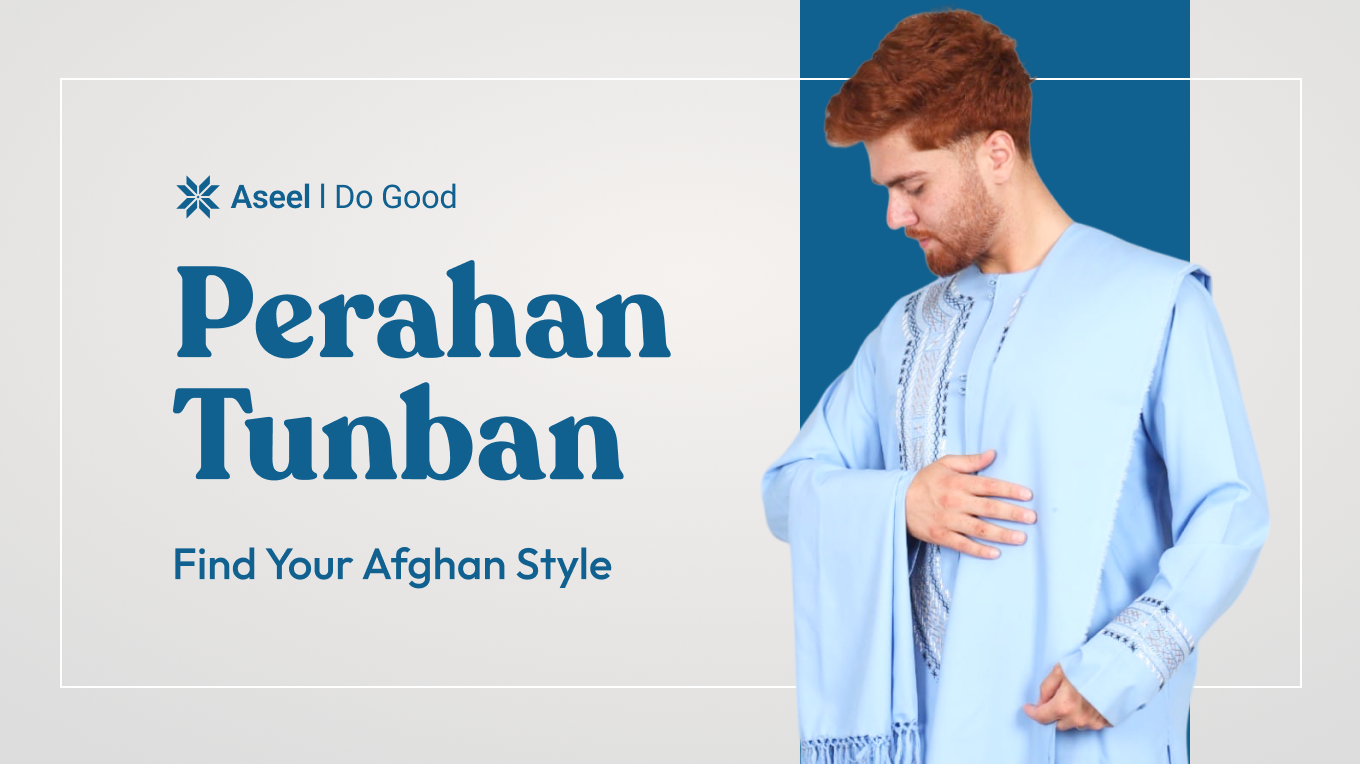
A perahan tunban is the traditional Afghan men's outfit: a wide, collarless, knee-length shirt called the perahan worn over loose drawstring trousers called the tunban. If you are buying one rather than reading about one, four things decide whether you will be happy with it. The shoulder fastening tells you whether the cut is genuinely Afghan. The embroidery tells you what you are paying for. The fabric weight tells you which months you can wear it. And the length tells you whether it will fit, because with a drawstring waist, length is the only measurement that can go wrong.
This post walks through all four, then covers sizing, what to layer over it, wedding and Eid lead times, and the questions worth asking a seller before you pay. The wider wardrobe, including women's dress, coats and headwear, is covered in the main guide to Afghan clothing.
What You Are Actually Buying
The perahan tunban as a garment worn by men in Afghanistan and in some parts of Pakistan, and the name is literal: perahan o tunban means gown and breech, or shirt and pants, in both Pashto and Dari. The Afghan clothing is the standard traditional outfit for men. This is not costume or formalwear. It is what a large part of the country wears every day, which is why it is cut for real use.
Perahan (The Shirt)
The perahan is cut wide and loose, with sleeves worn loose and pendent from the arms. It fits closer to the body down to the waist, then runs loose and full down to the knees. Open slits run up both sides from the hem, usually from around hip level, which is what lets you sit cross-legged on the floor or pray without the shirt binding across the back.
Tunban (The Trousers)
The tunban is worn loose and hanging, with ample folds gathered into plaits from below the knee to the ankle. A modern leg can be a yard wide, and roughly four yards of cloth. The waist is a drawstring rather than a fitted band, which is the single reason so much Afghan menswear is sold as free size and still fits properly.


Where The Cut Came From
Briefly, because it explains the shape. The khetpartug describes it as Pashtun clothing worn in Afghanistan, made of a loose tunic reaching below the knees and very full pleated trousers, and states that the khetpartug is the ancestor of the men's shalwar kameez worn in Afghanistan and Pakistan. Documentation dates to 1842, with reference to Elphinstone's 1815 An Account of the Kingdom of Caubul. The modern garment is a refinement of a cut that has been recorded for two centuries, which is worth knowing when a listing claims a design is new.
The Four Things That Decide the Price
Two perahan tunban sets can differ several times over in price with no visible difference in a photograph. Here is where the money actually goes.
The Shoulder Fastening
This is the cheapest thing to check and the most telling. The perahan buttons on either shoulder and is collarless. Encyclopaedia Iranica records the same: Afghan men's shirts, called perahan or korta, are typically collarless and fasten at one shoulder rather than down the chest.
If a listing photograph shows a stand collar and a row of buttons down the chest, you are not looking at an Afghan cut. It may still be a good shirt. It is a shalwar kameez or a Pathani kurta, and it should be priced as one. Ask for a photograph of the shoulder if the listing does not show it.
The Embroidery
The Afghan clothing records Kandahari doozi and Herati doozi as distinct regional styles, doozi meaning stitching, and the difference is visible and priced.
Kandahari work is whitework: fine counted embroidery on the collar band, the shoulder placket and the cuffs, worked in thread close to the ground colour so the effect is texture rather than contrast. The tradition behind it is khamak, described by the Textile Research Centre in Leiden as Kandahari whitework in satin stitch on fine cotton or white silk, stitched from the reverse side, with great care taken so that the front and back look alike. That last requirement is why it costs what it does. The Kandahari style perahan or shirt is embroidered and the trousers left plain, and calls that the most stylish combination for modern wear.
Herati work runs the other way: denser, in coloured thread, covering more of the chest panel. Neither is more authentic. They are two regional hands.
The general rule is that embroidery sits where the garment does not need to drape. Collar, placket, cuffs, sometimes a chest panel. A shirt embroidered across the skirt would not hang correctly, so if you see one, question the maker.


Hand Embroidered Afghan Men Clothes or Perahan Tunban Yakhn Dast Doz | Aseel
Fabric Weight and Fibre
The garment is usually made of cotton and polyester, and can also be made from a woolly fabric for winter. Encyclopaedia Iranica adds handwoven cotton, called karbas, to the traditional list. afghanistan-culture.com lists white, khaki, grey and blue as the common colours.
| Fabric | Season | What it does | Buy it for |
|---|---|---|---|
| Light cotton | Summer | Breathable, creases readily | Everyday heat, prayer |
| Cotton and polyester blend | All year | Holds a press, sheds creases | Work, travel, first purchase |
| Karbas handwoven cotton | Spring and autumn | Matte, textured, substantial | A traditional look worn daily |
| Wool blend | Winter | Warm, heavier drape | Cold months, layering under a coat |
| Fine cotton with hand embroidery | Occasions | Crisp, shows the stitching | Weddings, Eid, formal events |
A blend is a legitimate and often better everyday choice than pure cotton. It just needs to be described and priced as a blend. If a listing does not state the fibre, that silence is information, and asking is reasonable.
Hand Work or Machine Work
Ask for a photograph of the reverse of the embroidery. Hand work has an irregular back with visible knots and thread paths, and its repeated motifs vary slightly in size and spacing. Machine work has a uniform back, often with a contrasting bobbin thread running in even lines, and identical repeats, and frequently a stabiliser backing trimmed at the edges rather than removed.
Machine embroidery is faster, cheaper and perfectly serviceable. It should be priced as machine embroidery. A seller who works with artisans can answer this question in one sentence.
Getting the Size Right
Free size works for the trousers because of the drawstring. It does not work for length, and length is what people get wrong.
Take a shirt you already own and wear comfortably. Measure from the highest point of the shoulder seam straight down to the hem, then from that same point along the sleeve to your wrist bone. Those two numbers, shoulder to hem and shoulder to wrist, are what you compare against a listing. Then take your natural waist for the drawstring and your inside leg from crotch to ankle bone for the tunban.
A perahan tunban should land at or just below the knee, and the sleeve should reach the wrist bone rather than the base of the thumb. One caveat: if the shirt carries heavy embroidery across the chest panel, the fabric there will not give at all, so chest measurement matters far more on an embroidered set than a plain one.
Where a maker offers custom measurement, and most Afghan tailors do, take it. It usually costs little more than ready-made and it removes the guessing entirely. That is the single most useful decision in this whole post.
Perahan Tunban, Shalwar Kameez or Pathani Suit: Which One Are You Being Sold?
These three names are used interchangeably by sellers, and the substitution costs buyers money, because a Pathani suit sold as a perahan tunban is usually cut narrower than expected.
Shalwar kameez is the broad regional category: loose trousers with a loose over-shirt, worn from Afghanistan through Pakistan to northern India, in a huge range of cuts. Perahan tunban is the Afghan version, fuller through the body, longer in the shirt, fastening at the shoulder. The Pathani suit is a three-garment set of long kurta, salwar and vest, usually with kurta and salwar matching in colour, and that entry states directly that it evolved from the perahan tunban. It is formalwear, and the waistcoat is a standard part of the set rather than an option.
| What you check | Perahan tunban | Shalwar kameez | Pathani suit |
|---|---|---|---|
| Shirt fastening | Buttons at one shoulder, collarless | Usually front placket, often collared | Kurta-style front opening |
| Shirt length | Knee or below | Varies widely | Long kurta |
| Trouser volume | Very full, deep folds at the calf | Narrow to very full | Salwar, moderate |
| Waistcoat | Optional layer | Optional | Part of the set |
| Sold as | Afghan clothes for men, perahan tunban | Shalwar kameez, salwar suit | Pathani suit, Khan suit |
What to Buy With It
The perahan tunban is a base layer, and the additions are where the outfit becomes an outfit.
The waskat comes first. A waistcoat is the fastest way to move a plain set from everyday to formal, and it is cheaper than buying a second embroidered shirt. The Textile Research Centre lists the waskat as a standard component of Pashtun dress worn over the shirt. Occasion versions are velvet with raised metallic or leather-appliqué embroidery, and they carry the visual weight so the shirt underneath can stay simple. afghanistan-culture.com also notes the unglamorous reason waistcoats persist year-round: pockets. It comes off only in extreme summer heat.
The complete traditional set, which that same source calls Kalaye Afghani, is four pieces: shirt, trousers, a gold-stitch waistcoat and a gold or silver stitch hat, worn with flat embroidered shoes called paizar. That is the wedding configuration.
For the head, a skullcap, a turban wrapped over a cap, a wool pakol or a karakul. Encyclopaedia Iranica records the turban at three to six metres, called langota or dastar in Persian and patkay or pagri in Pashto, wrapped over a cap called a kolah or kholay, and notes that cap style signals which community a man belongs to. A cap is never a neutral choice.
Over the shoulders, a patu. The Textile Research Centre describes it as a large rectangular blanket, the thick counterpart to the thinner chador, and lists three uses in one line: outerwear, something to sit on, and a prayer mat. In northern Afghanistan a chapan coat goes over everything.
On the feet, leather sandals, often sold as Peshawari sandals, for warm weather, and hand-knitted wool socks for cold.
Buying for a Wedding or for Eid
These two occasions work differently, and the practical advice differs with them.
For a wedding, the standard combination is a fine cotton perahan tunban in a light colour, usually white, cream or pale grey, with a heavily embroidered velvet waskat over it, and in the north a chapan over both. The garments with gold threading and gold beads are worn for special occasions and weddings. Grooms wear the heaviest embroidery of anyone in the room. Budget for the waistcoat as the expensive item rather than the shirt.
Eid is about new clothes rather than the most elaborate ones, so most men buy or commission a fresh set in a lighter colour for each of the two Eids. The demand spike is short and sharp, and artisan lead times stretch considerably in the weeks before both. A custom order placed two weeks out will not arrive. Order four to six weeks ahead of either Eid, and earlier if you want hand embroidery.
Where to Buy, and What to Ask First
Wherever you buy, four questions separate a good purchase from a guess. Is the embroidery hand worked or machine worked, and can I see the reverse? What is the fibre content of the shirt and of the trousers? Does the shirt fasten at the shoulder? And what are the shoulder-to-hem and shoulder-to-wrist measurements on the size you are recommending?
A seller who works directly with makers answers all four quickly. A reseller who does not know their supply chain will answer two of them.
On Aseel, every piece is listed by the artisan or artisan shop that produced it, so you can see whose work you are buying before you order, and custom measurement is available on most sets. Aseel is an Afghan-founded marketplace, founded by Nasrat Khalid and headquartered in Arlington County, Virginia, and its Wikipedia entry records that between 2019 and 2023 the platform enabled 3,000 Afghan women to sell handicrafts online.
Keeping It Looking New
Plain cotton and blend sets are easy. Wash cool, inside out, on a low spin, and iron on the reverse so the iron never touches the outer face.
Embroidered sets need more thought, and the rule is that the most delicate element on the garment sets the method for the whole piece. Metallic thread should not go through a machine, because agitation lifts couched thread off the surface. Whitework on a collar band survives a gentle hand wash but should be pressed from the reverse only, with a cloth between iron and stitching. A velvet waskat goes to a dry cleaner and should never be pressed directly, because velvet pile crushes permanently. Store the waistcoat on a padded hanger rather than folded across the embroidery.
Frequently Asked Questions
How much should a perahan tunban cost?
Price tracks four things: hand or machine embroidery, the fibre and weight of the cloth, whether a waistcoat is included, and whether it is made to your measurements. A plain blend set with machine work sits at the bottom of the range and a hand-embroidered Kandahari set with a velvet waskat at the top. Any specific figure depends on the maker and the day, so check current listings rather than a number in an article.
What size perahan tunban should I order?
Compare two measurements from a shirt you already wear: shoulder seam to hem, and shoulder seam to wrist. The drawstring waist covers a wide range, so length decides fit. Take custom measurement where it is offered, especially on an embroidered set, since embroidered panels do not stretch.
Is a Pathani suit the same as a perahan tunban?
No. source describes the Pathani suit as a three-garment set of long kurta, salwar and vest, and states that it evolved from the perahan tunban. The Pathani suit is a formalised descendant with the waistcoat built into the set.
What is the difference between a perahan tunban and a shalwar kameez?
Shalwar kameez is the broad regional category. Perahan tunban is the Afghan version of it, cut fuller with a longer shirt, and Encyclopaedia Iranica records that Afghan men's shirts are typically collarless and fasten at one shoulder rather than down the front.
Can women wear a perahan tunban?
Yes, and it is a genuine search term. Encyclopaedia Iranica and the Textile Research Centre both record trousers with a long loose over-dress as the structure of Afghan women's dress, and the Hazara clothing names the perahan tunban among garments worn by Hazara women. Women's versions differ in cut, length and decoration rather than in category.
How do I know the embroidery is done by hand?
Ask for a photograph of the reverse. Hand work has an irregular back with visible knots and thread paths, and its repeats vary slightly. Machine work has a uniform back, often with a contrasting bobbin thread, and identical repeats.
How long does a custom perahan tunban take?
That depends on the maker and on the embroidery, and it lengthens sharply before both Eids. Ask for a stated lead time in writing before you pay, and order four to six weeks ahead of any fixed date.
Which colour should I buy first?
If it is your first set, buy a mid-tone in a blend: grey, khaki, black or a soft blue, all of which Aseel lists among the common colours. White and cream look best but show everything, and they are better as a second purchase for occasions.
Ready to Buy
If you know your two measurements and you have decided between machine and hand embroidery, you have everything you need. Start with the complete sets in the Perahan Tunban Afghani category, add a waskat if the set does not include one, and ask about custom measurement before you check out rather than after.
The waskat has its own buying guide covering embroidery types and what to pay for. Pakol and karakul are compared side by side in the Afghan men's headwear guide. The patu, the wool shawl that works as a blanket and prayer mat, is covered separately. The chapan, the northern coat, has its own guide. If you are dressing for a wedding specifically, start with what to wear to an Afghan wedding. And for the full wardrobe, read the main guide to Afghan clothing.

About Aseel
Aseel is a tech-driven startup providing a digital marketplace where artisans can sell their one-of-a-kind handcrafted products while supporting humanitarian efforts worldwide. We champion using practical skills to create the positive impact businesses and communities deserve. Aseel's intuitive platform empowers thousands of makers by connecting them with a global audience. Transparency and privacy are at the heart of everything we do. Our dedicated customer service team is available anytime to assist clients through our secure and protected platform.
Follow Aseel on Google
Add Aseel as a preferred source on Google to see more of our stories in your Search results.