Patu Afghan Shawls for Men: Which One to Order

Nov 19, 2026
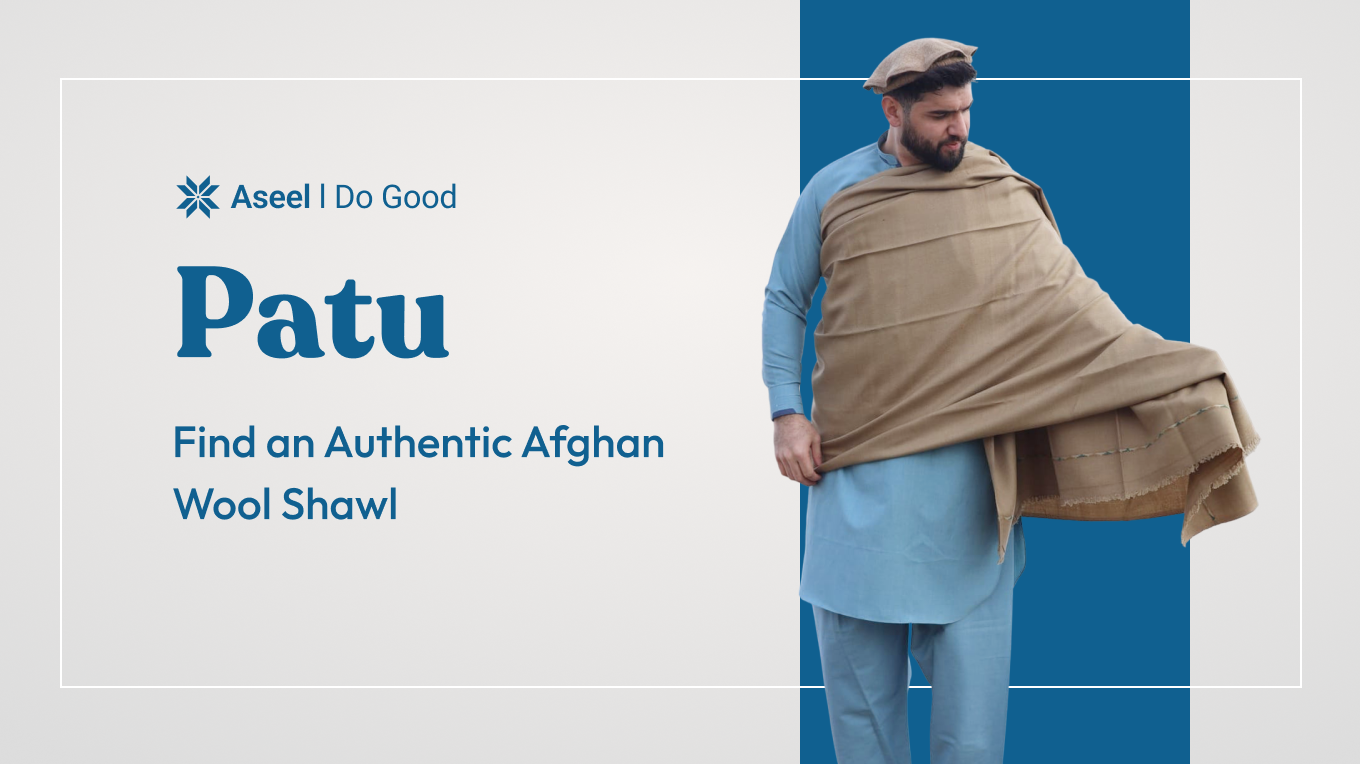
How to Spot a Real Wool Patu Before You Pay
A patu is the heavy Afghan wool shawl worn by men: a large rectangle of handwoven cloth thrown over the shoulders and wrapped once across the chest. It is the outer layer of the traditional Afghan men's wardrobe, worn over a peran tunban, under or over a chapan, and on its own through most of the cold season.
If you are buying one, two things decide whether you are happy with it. Whether the wool is genuinely wool, and whether the weight matches how you will wear it. Photographs answer neither. This post gives you the wool test, the weight guide, how to wrap it, and the questions worth asking before you pay. The wider wardrobe is covered in the main guide to Afghan clothing.
Start Here: Which Weight for Which Wear
| How you will wear it | Weight to buy | Size to buy |
|---|---|---|
| Daily, over a shirt | Medium | Standard |
| Winter outer layer | Heavy | Large |
| Outdoors, cold work | Heavy | Large |
| Formal, over a chapan | Light to medium | Standard |
| Indoors and travel | Light to medium | Standard |
| Gift | Medium | Standard |
If you are unsure, buy medium weight in the standard size. It is warm enough to be a real winter layer, light enough to wear indoors without overheating, and it is what most Afghan men actually own.
Real Wool or Blend: The Check That Saves You the Most
Blended and acrylic-mixed patus sell at wool prices constantly, and no photograph will tell you apart. Four checks, three of which you can run before paying.
Ask for the fibre in writing. Pure wool, wool blend, or wool and acrylic. A weaver answers immediately and names the animal. A reseller who bought a bale says "wool" and leaves it there.
Ask for a close photograph of the weave. Handwoven pure wool shows slightly irregular yarn with short fibres standing off the surface, and the weave itself is not perfectly even. Machine-made blends look flat, regular, and slightly shiny under direct light.


Ask about the edge. A traditional patu is finished with a hand-knotted fringe or a hand-rolled hem. A machine overlock on a piece sold as handwoven is a contradiction worth raising before you pay.
Then check it in the hand. Real wool is heavy for its size, feels dry and springy rather than slick, and recovers its shape when you crush it. It smells faintly of wool when damp, which blends never do. A pure wool patu is coarser against the neck than a cashmere scarf, and that is correct rather than a fault.
Blends are honest products at blend prices. They are only a problem sold as pure wool.
Weight and Size: The Specification Most Listings Omit
Patus run from a light everyday wrap to a piece dense enough to replace a winter coat, and weight is the number sellers leave out.
A light to medium patu drapes well, sits neatly over a chapan without bulk, and works indoors and in mild weather. It is not a winter layer on its own. A medium patu is the everyday standard, warm across the shoulders and comfortable to wear for hours without feeling like you are carrying something. A heavy patu is genuinely outerwear, holds warmth in hard cold, and is what you want if you will be outside in it rather than moving between buildings.
Ask for the dimensions in centimetres and the weight in grams before ordering. "Large" tells you nothing, and the gap between a 900 gram piece and an 1,800 gram piece is the gap between two entirely different garments.
Patu or Pashmina: Not the Same Purchase
Men shop both and they are not substitutes.
| Shawl | Fibre | Feel | Wear it for |
|---|---|---|---|
| Patu | Sheep wool | Dense, dry | Warmth, outdoors |
| Pashmina | Cashmere goat | Light, soft | Drape, formal |
A pashmina is fine cashmere goat fibre, light and soft, with excellent drape and modest warmth for its weight. A patu is dense sheep wool built to keep a man warm on a cold morning, and it is heavier and coarser by design. If someone offers you a "patu pashmina", ask which fibre, because it is one or the other.
Colours: Natural or Dyed
The traditional range is undyed and near-undyed: cream, oatmeal, mid grey, charcoal, and the natural browns of the fleece. Dyed patus come in deeper earth tones and, in some regions, a deep green.
Buy undyed natural for the traditional look and the longest life, since there is no dye to fade or bleed. Buy a dyed mid or dark tone if it will be worn outdoors regularly and you would rather not see every mark. Undyed cream looks the best of the range and shows the most, so it is a better second purchase than a first.
How to Wear a Patu
The traditional wrap is the once-around and it takes five seconds. Hold the shawl lengthways behind you, drape it across your back with one end hanging longer than the other, bring the long end across your chest and over the opposite shoulder, and let it fall down your back. Adjust until both ends hang roughly even at the front. No pin, no knot.
In real cold, bring it up over the back of the head as well. To take the weight off your neck, throw both ends back over the shoulders so it hangs like a cape. Those three positions cover everything.
Over a Peran Tunban
This is the combination it exists for. Cotton or wool-blend peran tunban, pakol on the head, patu once-around over the shoulders. Every piece is straight-cut and layered rather than fitted, so nothing pulls against anything else, and the whole outfit adjusts to temperature by adding and removing rather than by changing.
With a Chapan
In the north the patu goes over the chapan on the coldest days, not under it. Buy light to medium weight for this, because a heavy patu over a quilted chapan is more bulk than any man needs and it destroys the line of the coat.
With a Western Coat
The patu works better with western menswear than most people expect, because it reads as an oversized wool wrap rather than as costume. Over a plain overcoat, in natural grey or oatmeal, worn once-around, it looks like a very good scarf and nothing more. Keep it undyed, keep everything underneath plain, and let the weight of the wool do the work.
Why Wool Beats a Synthetic Wrap
Autocomplete on "patu shawl" returns "special forces" as one of its top suggestions, and the reason is practical rather than romantic. Men who spent time in Afghanistan learned what Afghan men already knew about dense wool.
It insulates when damp, which synthetic fleece does not. It does not hold odour the way synthetics do, so it can be worn for days and aired rather than washed. It blocks wind because the weave is dense rather than because of any coating. And it lasts decades rather than seasons.
If that is your reason for buying, three specifics. Buy heavy rather than medium. Buy large, because a short wrap slips off the shoulder when you move. And buy undyed natural wool, because dye fades unevenly with sun and washing while natural fleece colour does not.
Buying One as a Gift
The patu is close to the ideal gift in this category, for a practical reason: no sizing, no fit, nothing to measure. It works for a man who wants a traditional Afghan piece and equally for one who simply wants an excellent wool wrap.
For a gift, buy medium weight in a natural tone. Heavy is a specialist choice and light is a compromise. Medium undyed is the version that gets worn.
What You Are Paying For
A patu is woven on a loom in narrow widths, joined, then finished by hand at the edges. The wool is spun locally, often from flocks the weaving families keep themselves. That is slow work, and the price of a genuine handwoven patu reflects hours rather than materials.
The tradition runs across the Pashtun regions of Afghanistan and northwestern Pakistan, and in Nuristan and Kunar the weaving is a household craft passed between generations rather than a factory process. Nuristan Fashion, one of the artisan shops on Aseel, weaves patus alongside pakols and wool coats, which is why the natural palette runs consistently across everything they make.
Four things move the price: pure wool against a blend, handwoven against mill-made, weight, and size. A heavy handwoven pure wool patu in a large size sits at the top of the range, and a light mill-made blend at the bottom.

What to Search For: Patu, Patoo, Chadar or Loi
The same shawl sells under several names and they do not cross-search.
Patu and patoo are the two main English spellings, with pato appearing occasionally. Chadar is the thinner version of the same cloth, so a chadar is by definition lighter than a patu rather than a different garment. Loi is used in parts of the region for the large wool wrap. You will also see them listed simply as Afghan wool shawl, Pashtun shawl or men's wool shawl.
Search at least patu, patoo and afghan wool shawl. Listings under one name will not appear under the others, and the price framing varies considerably between them.
What to Ask Before You Pay
Four questions. What is the fibre, and is it pure wool or a blend? Is it handwoven or mill-made? What are the dimensions in centimetres and the weight in grams? And is the wool undyed or dyed?
A weaver answers all four in a sentence each. On Aseel every patu is listed under the artisan shop that wove it, so the answers come from the loom rather than from a warehouse.
Washing and Storing a Wool Patu
Wash it rarely. Wool resists odour naturally, and a patu that is aired regularly needs washing perhaps once a season. Overwashing is how most of them get ruined.
When you do wash it, use cool water and a wool detergent. Never hot water, which felts the wool permanently and turns a good shawl into something stiff and small. Do not wring it and do not put it in a machine. Press the water out between two towels, then dry it flat, because a wet wool shawl hung over a line stretches under its own weight and comes back longer and thinner than it went in.
For undyed natural wool, avoid any detergent containing optical brighteners or bleach, which will leave it patchy with no way back. For marks, spot clean rather than washing the whole piece.
Store it folded flat rather than hung, with cedar or lavender nearby, since moths are the only real threat to a patu. Never store it in plastic, which traps moisture against the wool.
Frequently Asked Questions
What is a patu?
A patu is a thick handwoven Afghan wool shawl worn by men over the shoulders, wrapped once across the chest. It is also spelled patoo or pato, and the thinner version of the same cloth is called a chadar.
Is a patu the same as a pashmina?
No. A pashmina is fine cashmere goat fibre, light and soft with excellent drape. A patu is dense sheep wool built for warmth, heavier and coarser by design. Different fibres, different purposes.
How do I know if a patu is real wool?
Ask for the fibre in writing and for a close photograph of the weave. Handwoven wool shows slightly irregular yarn with fibres standing off the surface. In the hand it is heavy for its size, dry and springy, and it smells faintly of wool when damp. Blends look flat and feel slick.
What weight patu should I buy?
Medium for daily wear and for gifts. Heavy for winter outerwear and outdoor use. Light to medium if you will wear it over a chapan or mostly indoors. Ask for the weight in grams, because "large" tells you nothing.
How do you wear a patu?
Drape it across your back with one end longer, bring that end across your chest and over the opposite shoulder, and let it hang down your back. No pin or knot. Pull it over the back of the head in hard cold, or throw both ends back over the shoulders to take the weight off your neck.
Can you wear a patu with western clothes?
Yes, and it works well. Over a plain overcoat, in natural grey or oatmeal, worn once-around, it reads as an oversized wool scarf. Keep the colour natural and everything underneath plain.
Can I machine wash a patu?
No. Hot water and agitation felt wool permanently. Hand wash cool with a wool detergent, press the water out between towels, and dry flat rather than hanging.
How much should a patu cost?
Price follows four things: pure wool against a blend, handwoven against mill-made, weight, and size. A heavy handwoven pure wool patu in a large size sits at the top of the range. Check current listings rather than any figure quoted in an article.
Why is the patu associated with special forces?
Because dense wool insulates when damp, resists odour, blocks wind through the weave rather than a coating, and lasts decades. Men who served in Afghanistan learned that from Afghan men. Buy heavy, large and undyed for that use.
Ready to Buy
You need two answers: what weight, and pure wool or blend. Medium weight in undyed pure wool covers almost every way a man will wear it, and it is the one to buy if you are unsure.
Wear it with a pakol, compared against the karakul in our Afghan hats guide. Layer it over your first peran tunban. For the northern coat, see which Afghan chapan to buy. And for the whole wardrobe, read the main guide to Afghan clothing.

Media Inquiries
For media inquiries, press requests, or interview opportunities related to this article or Aseel, please contact:
About Aseel
Aseel is a tech-driven startup providing a digital marketplace where artisans can sell their one-of-a-kind handcrafted products while supporting humanitarian efforts worldwide. We champion using practical skills to create the positive impact businesses and communities deserve. Aseel's intuitive platform empowers thousands of makers by connecting them with a global audience. Transparency and privacy are at the heart of everything we do. Our dedicated customer service team is available anytime to assist clients through our secure and protected platform.
Follow Aseel on Google
Add Aseel as a preferred source on Google to see more of our stories in your Search results.