Donate to Afghanistan: Crisis Relief, Humanitarian Aid, and How to Help Right Now

Jun 06, 2026
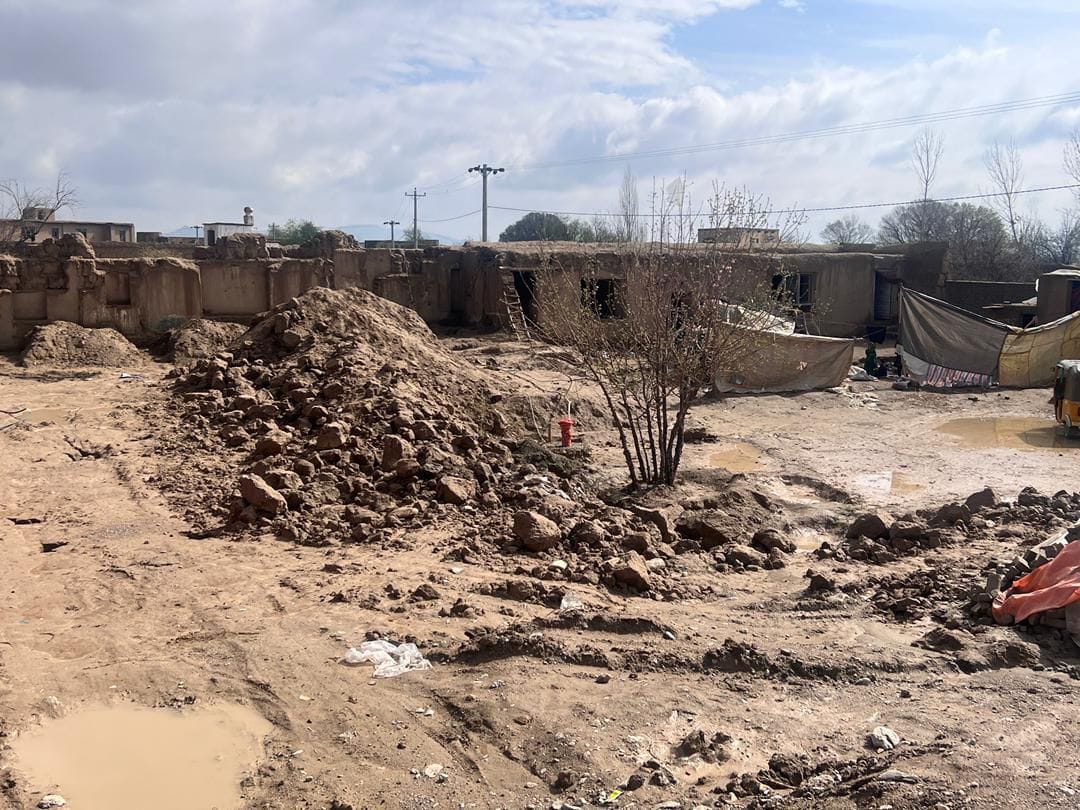
Afghanistan is facing one of the most severe humanitarian crises in the world. Nearly half of the entire population — 22.9 million people — requires urgent assistance just to survive. Behind that number are real families: mothers rationing food, children skipping meals, fathers who lost their livelihoods overnight, and women locked out of work, education, and public life.
If you want to donate to Afghanistan, help Afghanistan, or direct funds toward flood relief, hunger relief, or crisis response — this page gives you the full picture: what is happening, why it is getting worse, and exactly how your donation reaches a verified Afghan family with photographic proof.
What Is Happening in Afghanistan Right Now?
Afghanistan's crisis is not a single emergency. It is the compounding effect of economic collapse, climate disasters, mass displacement, and one of the most restrictive governance environments on earth.
The hunger crisis is the most immediate threat. During the 2025–2026 lean season, 17.4 million people are projected to face crisis or worse levels of food insecurity (IPC Phase 3 or above). Of those, 4.7 million people are in emergency food insecurity (IPC Phase 4) — a category that means a family's survival is at immediate risk without outside assistance. Emergency hunger levels have risen by more than 50 percent compared to the same period last year.
The flood crisis is accelerating. As of April 2026, Afghanistan is experiencing active and deadly flooding. Storms and heavy rainfall that began on March 26, 2026 have struck most of the provinces. As of April 7, 2026, the death toll has reached at least 110 people, with 160 injured, 958 homes completely destroyed, and a further 4,155 homes partially damaged. Nearly 6,000 families have been affected and over 11,600 jeribs (approximately 5,700 acres) of farmland have been wiped out. The Kabul–Jalalabad highway and the Salang Pass — two of the country's most critical road links — have been shut by landslides. Afghanistan's meteorological department has forecast continued heavy rainfall and issued fresh warnings for all 34 provinces in the coming days. Climate change is making these events more frequent and more devastating — floods that once occurred primarily in spring now strike all year round.
The funding crisis is making everything worse. As of mid-2025, Afghanistan's Humanitarian Needs and Response Plan (HNRP) was only 17 percent funded. The withdrawal of major donor support has caused a cascading shutdown of life-saving services: over 420 health facilities have closed, leaving nearly 3 million people without basic healthcare. Approximately 300 nutrition treatment centers have shut down, cutting off care for around 80,000 malnourished children and mothers. More than 200 protection service points supporting survivors of gender-based violence are no longer operational.
The displacement crisis is adding new pressure. In 2025 alone, an estimated 2.78 million Afghans returned to Afghanistan from Iran and Pakistan — the majority forcibly deported. Most arrived with no shelter, no income, no food, and no healthcare access.
Who Needs Help Most in Afghanistan?
Afghan Women and Girls
The Taliban's restrictions have effectively erased Afghan women from economic and public life. Women are banned from most forms of employment, secondary and higher education, and many public spaces. Families that depended on women as primary earners have lost their income entirely. Adolescent girls are being pushed into early or forced marriage. Over 200 protection service points supporting survivors of gender-based violence have been shut down due to funding cuts, leaving nearly one million women and girls without access to critical referral services.
Afghan Children
According to UNICEF, 12.3 million children in Afghanistan need lifesaving aid. The WFP reports that acute malnutrition rates exceed emergency thresholds in 25 out of Afghanistan's 34 provinces. Approximately 41 percent of Afghan children suffer from stunting — a largely irreversible consequence of severe malnutrition in early childhood. Nearly half of children under 5 require urgent nutrition support. Children who return from Iran and Pakistan face compounded risks: no school access, no healthcare, and no shelter.
Afghan Refugees and Returnees
By the end of 2024, 5.8 million Afghan refugees were registered globally. Over 3 million have returned to Afghanistan since September 2023 under conditions of acute deprivation. Surveys found that 87 percent of returnee households required housing assistance, 80 percent needed financial support, and 71 percent lacked sufficient food upon arrival. These families are not returning to stability. They are returning to a crisis.
Flood and Earthquake Survivors
Afghanistan sits in one of the world's most seismically active regions. The 2023 Herat earthquakes displaced 380,000 people.The April 2026 floods are the most urgent active disaster in Afghanistan right now. Flooding, landslides, and lightning strikes have killed at least 110 people across most of the provinces since March 26, 2026, with more rainfall forecast. Nearly 6,000 families have lost their homes or farmland. Flood victims lose not just their homes but their ability to grow food and earn income, which pushes them directly into acute food insecurity — on top of a hunger crisis that was already at emergency levels before the floods began.

Catastrophic Flooding Across Afghanistan
Afghanistan's humanitarian crisis is worsening. 22.9 million people need aid.
How to Help Afghanistan: What Your Options Are
When you search for ways to donate to Afghanistan, the results include large institutional names — UNHCR, Save the Children, the International Rescue Committee, the UN Crisis Relief Fund. These are legitimate organizations with enormous resources and established infrastructure.
They also share a structural limitation: your donation enters a general fund. You do not know which family received it, what they received, when it was delivered, or whether it arrived at all. This is not a criticism of their work. It is simply how pooled humanitarian funding operates at scale.
Aseel is different in one specific and verifiable way: every donation to Afghanistan through Aseel is delivered to a registered recipient family, photographed by a ground volunteer, and confirmed back to the donor.

What Is Aseel? The Verified Way to Donate to Afghanistan
Aseel is a dual-mission platform founded in 2017 by Afghan entrepreneur Nasrat Khalid. It combines an ethical Afghan artisan marketplace (Buy Good) with a verified humanitarian aid coordination system (Do Good). The platform is headquartered in Arlington, Virginia, with offices in Turkey and Afghanistan.
The name Aseel means "authentic" in Persian and Dari — and authenticity is the entire operating philosophy of the platform.
Aseel has channelled over five million dollars in verified direct aid to 642,500 people across Afghanistan. Its work has been covered by Time, NPR, BBC, and Al Jazeera, and recognized by MIT Solve.
How Aseel's Aid Delivery Works
AidOS Platform. Aseel uses its proprietary Aid Operating System (AidOS) to coordinate aid delivery end-to-end. The system manages recipient registration, delivery routing, volunteer coordination, and confirmation reporting in a single architecture.
OMID Digital ID Verification. Every aid recipient is verified using the OMID digital identity system before they receive assistance. This prevents duplicate deliveries and ensures aid reaches genuinely vulnerable families.
Ground Teams Across 24 Provinces. Aseel operates across 24 of Afghanistan's 34 provinces through its Atalan Network — a trained volunteer corps that locates verified recipients, delivers aid packages, and photographs every distribution.
Photographic Proof of Delivery. After each delivery, donors receive photographic confirmation showing their specific donation reaching a specific family. This is not a general progress report. It is documentation of your contribution.
0% Service Fees on Grand Challenges. Aseel charges 0 percent service fees on its structured Grand Challenge campaigns. Every dollar donated goes to the recipient.
Afghanistan Flood Relief Donation: How Aseel Responds
Afghanistan's flood crisis is one of the most consistently underfunded emergencies in global humanitarian response. Floods destroy homes, contaminate water supplies, kill livestock, and wipe out crops — setting families back by years of slow recovery in a matter of hours.
Aseel launched its Aseel Disaster Fund specifically to respond to this cycle of crisis. When floods, earthquakes, landslides, or extreme weather events strike, the fund deploys immediate basic packages covering food, shelter materials, and medical aid to affected families. Ground teams from the Atalan Network purchase and deliver packages on an urgent basis, with coverage designed to reach communities that larger organizations struggle to access.
Afghanistan is currently in the middle of an active flood emergency. As of April 7, 2026, storms and landslides that began on March 26 have killed at least 110 people across most of the provinces, injured 160, destroyed 958 homes entirely, and damaged a further 4,155. Nearly 6,000 families have been directly affected. Major highways including the Kabul–Jalalabad route and the Salang Pass are closed. More rainfall is forecast. Aseel's Disaster Fund is the fastest verified channel to get emergency packages to flood-affected families right now — with photographic proof of delivery returned to every donor.
If you are looking specifically for an Afghanistan flood relief donation that provides proof of delivery, Aseel's Disaster Fund is the only platform built to give you that confirmation.
Afghanistan Hunger Relief: The Scale of the Problem and What Donations Fund
Afghanistan's food crisis is driven by a combination of factors that have reinforced each other over several years:
-> Economic collapse following August 2021, with Afghanistan's economy contracting by almost one-third
-> Drought conditions across key rain-fed agricultural regions, intensifying since 2018
-> Mass displacement reducing agricultural labor and income
-> Rising food prices outpacing household purchasing power
-> Funding shortfalls forcing the closure of nutrition programs
During the current lean season, 4.7 million Afghans are in emergency food insecurity — the level at which starvation becomes a real and immediate risk. Emergency hunger levels have risen more than 50 percent year-over-year.The April 2026 floods are now compounding this directly: over 11,600 jeribs of farmland have been destroyed in the current disaster alone, stripping thousands of families of their only source of food and income at the worst possible time.
When you donate to Afghanistan through Aseel's hunger relief campaigns, funds are directed toward emergency food packages. Each standard package is designed to sustain a family for up to five weeks and includes essential food items calibrated to the nutritional needs of Afghan households.
Aseel's ongoing Grand Challenge for malnutrition has raised USD 5,090 toward a USD 50,000 goal, with five active campaigns funding lifesaving nutrition programs and medical care for children and mothers.
Afghanistan Crisis Relief: Ongoing Grand Challenges on Aseel
Aseel's Grand Challenge structure organizes its humanitarian response into specific, funded campaigns tied to verified needs. Each campaign has a stated goal, a delivery mechanism, and per-transaction proof of delivery.
Active Grand Challenges currently funding crisis relief in Afghanistan include:
-> Malnutrition Response — funding nutrition programs for 2.5 million children and mothers at risk
-> Returnee Emergency Relief — supporting 100 vulnerable families in Kabul, primarily widows and households dependent on street-working children, who returned from Iran and Pakistan with no resources
-> Women's Empowerment — Aseel's most successful Grand Challenge, with USD 279,350 raised toward a USD 370,000 goal, providing remote work opportunities to Afghan women directly confronting the employment ban
-> Climate Emergency Response — now responding to the active April 2026 flood emergency in which storms beginning March 26 have killed at least 110 people, injured 160, and destroyed or damaged over 5,000 homes across most of the provinces
-> Orphan Support and Winter Relief — ongoing campaigns covering immediate survival needs for orphaned children and families facing winter without heating or shelter
All active campaigns are visible on Aseel's Do Good page with live funding progress, recipient details, and campaign structure.
Afghanistan Humanitarian Aid: The Funding Gap You Can Close
The scale of Afghanistan's crisis far exceeds the resources currently available. The 2025 HNRP is only 17 percent funded. In 2024, the United States contributed USD 735.7 million, covering 47 percent of the total requirements for that year's plan. The withdrawal of that funding has left a gap that no single institution can fill.
Between January and March 2025, humanitarian partners reached only 7.6 million people — compared to 9.4 million during the same period in 2024. The decline is directly attributable to funding shortfalls.
Private donations are now more consequential than at any point in Afghanistan's recent history. Traditional institutional funding has contracted sharply. Individual donors who choose to help Afghanistan are, in a real sense, filling a gap that governments have left open.
How to Donate to Afghanistan Through Aseel: Step by Step
Donating to Afghanistan through Aseel takes less than five minutes.
-> Go to Aseel Grand Challenges and browse active campaigns and Grand Challenges
-> Select your cause — hunger relief, flood relief, women's empowerment, orphan support, malnutrition response, or let Aseel decide based on the most urgent need
-> Choose your donation amount — contributions start at $1, and any amount reaches a real family
-> Complete your donation through Aseel's secure payment system
-> Receive photographic confirmation when your aid package is delivered and documented by a ground volunteer
You can also sponsor a family, start your own campaign, or apply to join the Atalan Network as a volunteer.
Frequently Asked Questions
How do I donate money to Afghanistan? The most verifiable way to donate to Afghanistan is through Aseel. Aseel delivers aid packages to registered recipient families across 24 provinces, photographs each delivery, and sends confirmation back to the donor. You can also donate through UNHCR, Save the Children, and the International Rescue Committee, which operate large pooled funds for Afghanistan relief.
Who is providing humanitarian aid to Afghanistan right now? The primary institutional providers of humanitarian aid in Afghanistan are OCHA (United Nations Office for the Coordination of Humanitarian Affairs), UNHCR, WFP (World Food Programme), UNICEF, and the International Rescue Committee. Aseel operates independently as a verified direct-delivery platform reaching families across 24 Afghan provinces with proof-of-delivery documentation.As of April 2026, Aseel's Disaster Fund is actively responding to the ongoing flood emergency affecting most of the provinces.
How can I help Afghanistan if I cannot donate money? You can help Afghanistan by joining Aseel's Atalan volunteer network, sharing active campaigns with your community, purchasing Afghan handmade products through Aseel's Buy Good marketplace (which directly supports Afghan artisans), or starting a fundraising campaign on the Aseel platform to pool donations for a specific cause.
Who is the biggest donor to Afghanistan? Historically, the United States was the largest single donor, contributing USD 735.7 million in 2024 and covering 47 percent of that year's HNRP requirements. The withdrawal of US funding in 2025 has created a critical gap in Afghanistan's humanitarian response. The European Union, individual EU member states, and Gulf country donors have stepped up partially, but the overall funding shortfall remains severe.
Is Afghanistan still getting aid? Yes, but at significantly reduced levels. As of mid-2025, only 17 percent of Afghanistan's 2025 Humanitarian Needs and Response Plan was funded. The closure of over 420 health facilities, 300 nutrition centers, and 200 gender-based violence protection points reflects the direct impact of this shortfall on the ground.This funding gap is now being compounded by an active April 2026 flood emergency affecting all 34 provinces.
Does the US still give money to Afghanistan? As of 2025, the US paused and subsequently halted the majority of its humanitarian and development assistance to Afghanistan. In 2024, the US contributed USD 735.7 million — nearly half of all humanitarian funding for Afghanistan. The removal of this funding has significantly reduced the scale of the humanitarian response.
What does my donation to Afghanistan actually buy? Through Aseel, a donation funds an emergency aid package delivered to a verified family. Standard packages include essential food items designed to sustain a family for up to five weeks. Specific campaign donations may fund nutrition treatment for malnourished children, shelter materials for flood survivors, remote work opportunities for Afghan women, or other targeted interventions based on the active Grand Challenge you select.
Afghanistan: A Nation That Has Not Given Up
Afghanistan's people have endured more than four decades of conflict, three consecutive years of La Niña-driven drought and floods, economic collapse, and the near-complete erasure of women from public life. As of April 2026, they are also enduring active floods that have killed over 110 people in less than two weeks, with more rainfall on the way. Despite all of this, Afghan families continue to work, build, create, and care for one another.
Aseel was founded on the belief that the resilience of Afghan people deserves real support — not bureaucratic distance, not annual reports, not a progress bar on a fundraising page, but verified, photographed, confirmed delivery of aid to a specific family in a specific province.
642,500 people have been reached. The goal is one million.
Your donation to Afghanistan today moves that number forward — with proof.
About Aseel
Aseel is a tech-driven startup providing a digital marketplace where artisans can sell their one-of-a-kind handcrafted products while supporting humanitarian efforts worldwide. We champion using practical skills to create the positive impact businesses and communities deserve. Aseel's intuitive platform empowers thousands of makers by connecting them with a global audience. Transparency and privacy are at the heart of everything we do. Our dedicated customer service team is available anytime to assist clients through our secure and protected platform.