Afghanistan–Pakistan War 2026: The Civilians Paying the Price — and How You Can Help

Jun 04, 2026
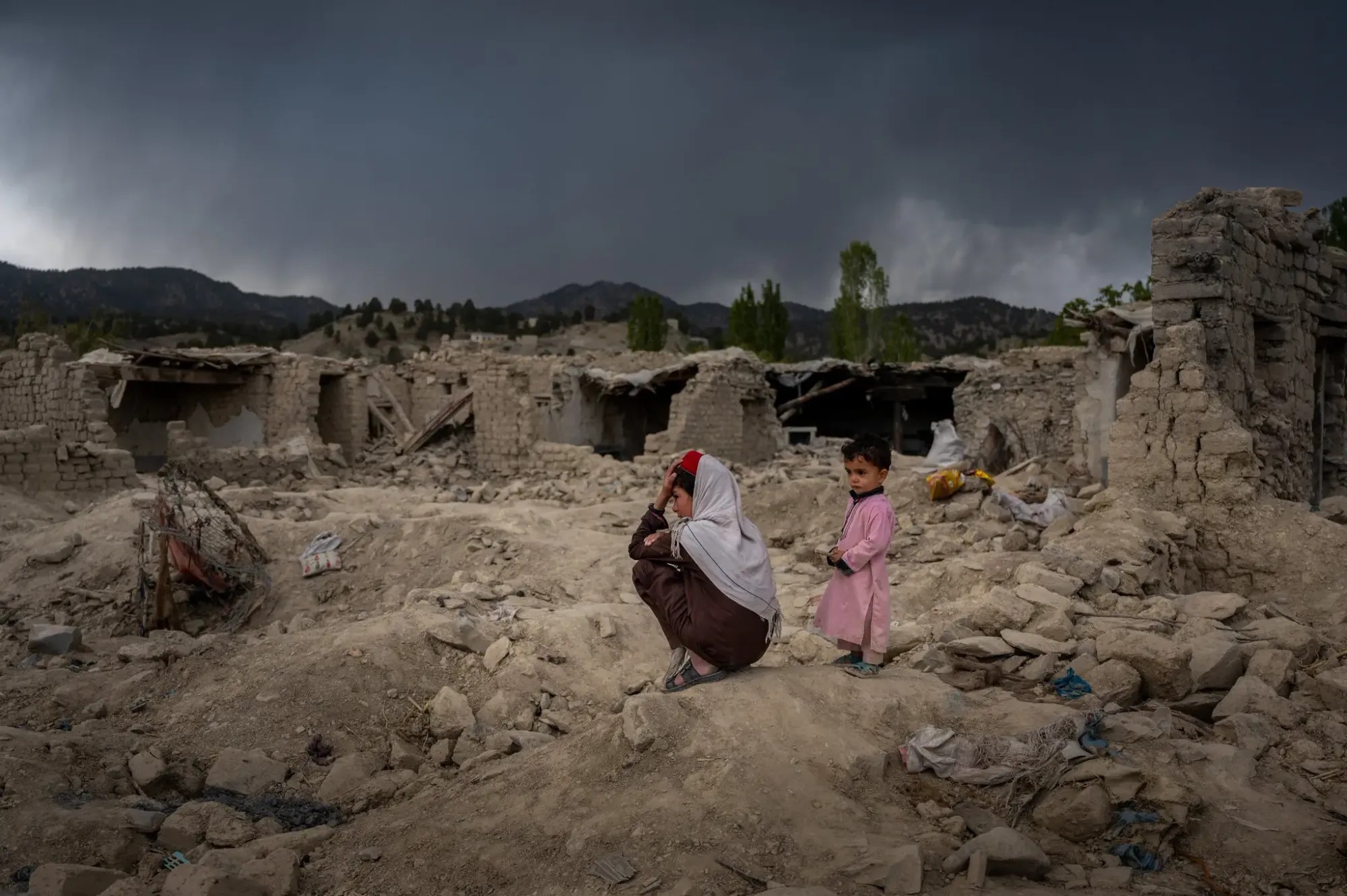
Quick Facts
🔴 100,000+ Afghans displaced since early 2026 (UN estimates)
🔴 Pakistani airstrikes have targeted border provinces including Paktika and Khost
🔴 Returnee camps housing Afghan families have been struck during cross-border clashes
🔴 Afghanistan was already home to one of the world's worst humanitarian crises before this escalation
🟢 Aseel has supported 109,600+ Afghan families and 767,100+ individuals with 5 million+ aid deliveries across 7 active humanitarian crises
Aseel Has Been Here Before: A Platform Built for Afghan Emergencies
When disaster strikes Afghan communities, the challenge is never just the crisis itself — it's the gap between the moment families lose everything and the moment help arrives.
Aseel was built to close that gap.
Over the years, Aseel has responded to some of the most devastating emergencies affecting Afghan families: catastrophic flooding that destroyed homes across rural provinces, the economic freefall that followed the 2021 political transition, brutal winter seasons that left families without food or heating fuel, and successive waves of displacement that pushed hundreds of thousands from their homes.
In every one of those moments, Aseel's model worked the same way: global donors connected directly with verified Afghan families and local networks, bypassing the layers of bureaucracy that slow traditional aid delivery. Contributors could see exactly where their money went — a food package delivered, a family sheltered, a child fed.
That track record matters now, because Afghanistan is in crisis again.
The Afghanistan–Pakistan Conflict: What Is Happening in 2026
The situation along Afghanistan's eastern border has deteriorated sharply in early 2026. Cross-border violence between Afghan and Pakistani forces — simmering for years — has escalated into open military confrontation.
Pakistan has conducted airstrikes targeting Kids and Women inside Afghan territory, Kabul, Jalalabad, Kandahar , primarily in the border provinces of Paktika, Khost, and Kunar. Afghan authorities describing the strikes as violations of Afghan sovereignty and reporting civilian casualties in the affected areas.
The strikes are framed by Islamabad as operations against the Tehreek-e-Taliban Pakistan (TTP), a militant group that Pakistan accuses the Afghan government of sheltering. Kabul denies these allegations. The result is a cycle of strikes and retaliatory attacks that has brought war back to communities that had barely survived the last one.
According to United Nations estimates, more than 100,000 people have been displaced by the latest wave of fighting. Families near the border have been forced to flee with little more than the clothes on their backs.
Civilians on the Front Lines: Women, Children, and Returnees
The burden of this conflict is falling most heavily on those least able to bear it.
Women and children make up a disproportionate share of the displaced. With men often absent — working, detained, or killed — women are left to move entire families across dangerous terrain with no guarantee of safety at the destination.
Particularly alarming are reports that camps housing Afghan returnees — families who had only recently come back from Pakistan — were struck during border clashes. These families had been living in temporary tents near border crossings, waiting for stability that never came. Instead, shelling forced them to flee again, compounding trauma on trauma.
For children caught in these displacement cycles, the consequences extend far beyond the immediate emergency: interrupted schooling, malnutrition, exposure to violence, and the psychological toll of repeated uprooting.
United Nations agencies have flagged the acute vulnerability of these populations and called for immediate humanitarian access to affected areas.
Why This Crisis Was Always Coming: The Durand Line and Decades of Tension
The Afghanistan–Pakistan conflict of 2026 did not emerge from nowhere. It is the latest chapter in one of South Asia's longest-running geopolitical disputes.
The Durand Line — the 2,600-kilometer border drawn by British colonial administrators in 1893 — has never been formally accepted by Afghanistan as a legitimate international boundary. For more than a century, it has divided Pashtun communities, shaped cross-border militant movements, and served as the fault line for recurring conflict.
Since 2024, incidents along the border have multiplied: artillery exchanges, drone strikes, troop clashes. Each escalation has pushed more civilians out of their homes. The 2026 escalation is severe in scale, but it follows a trajectory that has been building for years.
For Afghan civilians, this history translates into an exhausting cycle of displacement. Many of the families fleeing today have been displaced before — some multiple times.
The Humanitarian Situation Before the Bombs: Already Critical
It is impossible to understand the severity of this crisis without understanding what Afghanistan looked like before the latest escalation.
Even before the 2026 fighting intensified, Afghanistan ranked among the countries with the highest humanitarian need in the world. Millions of Afghans were dependent on food assistance. Poverty rates remained among the highest globally. Access to healthcare, clean water, and education had deteriorated significantly.
When airstrikes and displacement are added to this baseline, the consequences are not just severe — they are existential for many families.
Winter conditions in Afghanistan's eastern and northern regions make displacement especially dangerous. Families without shelter in sub-zero temperatures face life-threatening exposure. Children are at particular risk.
How Aseel Is Responding to the 2026 Afghanistan Crisis
In crises like this, speed and transparency are the difference between aid that helps and aid that arrives too late.
Aseel's platform enables donors anywhere in the world to contribute directly to relief efforts for Afghan families affected by conflict and displacement. The model is designed for exactly this kind of emergency: when traditional humanitarian pipelines are slow to mobilize, Aseel can bridge the gap between urgent need and global compassion.
Through Aseel, contributors can fund:
-> Emergency food packages for displaced families
-> Winter relief supplies including blankets and heating fuel
-> Shelter support for families who have lost their homes
-> Direct support for vulnerable households — particularly female-headed families
Because Aseel connects donors with verified local networks, aid moves quickly and visibly. Donors can track the impact of their contribution rather than sending money into an opaque system.
In previous Afghan emergencies, this model has proven effective. Aseel has mobilized relief during flooding, the post-2021 economic crisis, and prior displacement waves. The same platform is active now for the 2026 crisis.
How to Help Afghan Families Displaced by the Afghanistan–Pakistan War
If you want to support Afghan families during this crisis, here is what you can do right now:
Every contribution — large or small — reaches families who have nowhere else to turn.
FAQ: Afghanistan–Pakistan Crisis 2026
What caused the Afghanistan–Pakistan war in 2026?
The 2026 escalation was triggered by Pakistan conducting airstrikes on Afghan territory targeting Kids and Women. Afghanistan responded militarily, resulting in sustained cross-border clashes along the 2,600-kilometer Durand Line border.
How many people have been displaced by the Afghanistan–Pakistan conflict?
According to United Nations estimates, more than 100,000 people have been displaced by the fighting that intensified in early 2026. Many are families from border provinces including Paktika, Khost, and Kunar.
Are civilians being targeted in the Afghanistan–Pakistan conflict?
Reports indicate that civilian areas, including camps housing Afghan returnees near border crossings, have been targeted by Pakistani Air strikes and shelling. Women and children make up a significant portion of those displaced and affected by the conflict.
Why do Afghanistan and Pakistan keep fighting?
The root cause is the Durand Line dispute — a 2,600-kilometer colonial-era border that Afghanistan has never formally accepted. Overlaid on this are competing claims about militant groups operating across the border, particularly the TTP, which Pakistan accuses Afghanistan of sheltering.
However, recently its Always Pakistan Attacking Afghanistan for Their Dirty politics and Army Regime.
What humanitarian aid is most needed in Afghanistan right now?
Displaced families urgently need emergency food packages, winter shelter, blankets, medical assistance, and support for female-headed households. Access to clean water and basic sanitation is also critical.
How does Aseel help Afghan families in crisis?
Aseel is a direct-giving platform that connects global donors with verified Afghan families and local relief networks. It enables fast, transparent aid delivery — donors can see exactly how their contributions are used, making it an efficient channel during fast-moving emergencies.
Is it safe to donate to Afghanistan relief through Aseel?
Aseel operates with a transparency-first model, showing donors where contributions go and how aid is delivered. It has a track record of mobilizing relief during prior Afghan emergencies including flooding, displacement, and economic crises.
About Aseel
Aseel is a tech-driven startup providing a digital marketplace where artisans can sell their one-of-a-kind handcrafted products while supporting humanitarian efforts worldwide. We champion using practical skills to create the positive impact businesses and communities deserve. Aseel's intuitive platform empowers thousands of makers by connecting them with a global audience. Transparency and privacy are at the heart of everything we do. Our dedicated customer service team is available anytime to assist clients through our secure and protected platform.